

Home Blog Page 3

Oglmove Review: Is This Sustainable Women’s Clothing Brand Worth Your Attention?

0

If you have spent any time trying to build a wardrobe that actually works for your life, you already know the frustration. You buy something that looks good on a model, it arrives, and it either fits awkwardly, wrinkles after one wash, or falls apart within a season. Worse, you later find out the brand you trusted had questionable manufacturing practices, and suddenly that purchase feels like a mistake on more than one level. The modern woman shopping for clothes is not just asking “does this look good?” She is asking whether it will hold up, whether it can move with her through a full day, and whether the brand behind it aligns with values she actually holds.

Oglmove appears to be built as a direct answer to that frustration. Based on what the brand represents, it positions itself around sustainable women’s clothing designed for genuine comfort and versatility across everyday situations. The range covers tops, pants, skirts, dresses, and matching sets, which means it is aiming to be a real wardrobe solution rather than a niche capsule of a few pieces. The main buying question is whether the execution lives up to that positioning, and whether it fits your specific lifestyle and needs.

The short answer: if you are a practical buyer who wants clothing that moves between contexts without requiring a full outfit change, and you care about how your clothes are made, Oglmove is worth a serious look. Check the official product page to see what styles and sets are currently available.

Disclosure: This article contains affiliate links. If you purchase through a link on this page, we may earn a commission at no additional cost to you.

What Oglmove Is and Why It Matters

Oglmove is a women’s clothing brand built around two core ideas: sustainability and wearability. These are words that get thrown around loosely in fashion, but the brand appears to take both seriously as design principles rather than marketing labels.

The sustainable angle matters because clothing production is one of the more resource-intensive industries globally. A brand that leans into sustainability is making specific choices about materials, production methods, and product longevity. For buyers, that typically translates into clothing that is built to last longer, feels better against the skin, and carries less environmental guilt. The specific materials and certifications that Oglmove uses are worth verifying directly on the product page, since those details can shift with new collections.

The versatility angle matters just as much for everyday function. The product range spans tops, pants, skirts, dresses, and matching sets, which suggests the brand is thinking about how pieces coordinate with each other and adapt across settings. A matching set that works for a weekend brunch and can be broken apart for a Monday work call is genuinely useful. That kind of thoughtful range design reduces the mental load of getting dressed and makes each piece earn its place in a limited-space wardrobe.

The comfort focus rounds out the picture. Clothing designed for comfort is not just about soft fabric. It includes cut, structure, and how a garment behaves when you sit, stretch, carry a bag, or spend six hours on your feet. If Oglmove delivers on this dimension, it addresses one of the most common complaints women have about stylish clothing: that looking put-together often requires physical sacrifice.

Who Should Buy Oglmove

The minimalist wardrobe builder. If you are actively trying to own fewer, better pieces, a brand that offers coordinated sets and versatile separates makes a lot of sense. You can build combinations rather than accumulating one-off items that never quite work together.

The sustainability-conscious shopper. If the environmental and ethical footprint of your purchases factors into your decisions, Oglmove’s sustainability positioning puts it on a short list worth evaluating. Before buying, it is reasonable to check what specific claims the brand makes about its materials and supply chain.

The busy professional or active woman. Someone who needs clothing that transitions from a morning meeting to an afternoon errand run to an evening dinner does not have time for multiple outfit changes. Clothing designed for comfort and versatility is a practical solution to that real scheduling reality.

The woman who has been burned by fast fashion. If you have spent money on cheap pieces that looked great in the product photo and fell apart or lost their shape after three washes, a brand that prioritizes quality construction and sustainable materials is a meaningful step up.

The practical gift buyer. Matching sets and versatile separates make strong gifts for women who are hard to shop for. A coordinated set removes the guesswork of whether a top and bottom will actually work together.

Who Should Skip Oglmove

Buyers looking for formal occasion wear. If you need a gown for a wedding or a highly structured blazer for a courtroom, a brand focused on comfortable everyday versatility may not be your primary destination. The range appears to lean toward wearable everyday and casual-to-smart categories.

Shoppers with a very tight budget who prioritize low upfront cost. Sustainable and quality-focused clothing typically costs more per piece than fast fashion alternatives. If budget is the single deciding factor, the per-item price may be higher than what you are used to seeing at mass-market retailers. That said, cost-per-wear over a longer garment lifespan often balances out.

Buyers who need highly specialized athletic performance wear. If you need moisture-wicking compression gear built specifically for high-intensity training, a dedicated sportswear brand with performance-specific technology may serve you better. Oglmove’s comfort focus appears oriented toward everyday movement rather than sport-specific demands.

Key Reasons Oglmove Stands Out

Sustainable materials and production focus: For buyers who care about what their clothes are made from and how they are made, this positioning places Oglmove in a narrower, more considered category than mass-market fashion, which tends to mean more consistent quality control.

Coordinated matching sets: Instead of hunting for separates that happen to work together, matching sets remove guesswork from your wardrobe and make it easier to get dressed confidently without spending significant time on outfit planning.

Comfort-forward design across multiple silhouettes: A range that includes tops, pants, skirts, and dresses with a comfort orientation means you are not sacrificing ease of movement or all-day wearability for the sake of aesthetics.

Versatile enough to cross contexts: Pieces designed to move from casual to smart-casual settings are genuinely more useful per item, which matters for anyone managing a wardrobe with limited closet space or travel packing constraints.

Range depth for mix-and-match building: Having access to multiple categories in the same aesthetic language means individual pieces work together, giving you more outfit combinations from fewer total items.

Real-World Use Cases

OGLmove two-piece wrap bra tank and palazzo pants official photo

Everyday wear and commuting. A well-designed top and pants combination from a comfort-focused brand holds up through a full commute, a day at a desk, and an after-work stop without feeling either overdressed or sloppy. This is the use case where versatile everyday clothing earns its keep.

Travel packing. Travelers trying to pack light need pieces that work in multiple combinations and do not wrinkle aggressively in a suitcase. A matching set that can be worn together or broken apart gives you more outfit options from fewer packed items, which is exactly the kind of efficiency that makes travel less stressful.

Weekend and social settings. Brunch, casual dinners, weekend errands, and low-key social events all call for clothing that looks intentional without requiring significant effort. Coordinated sets and versatile separates cover this territory well without the formality of occasion wear.

Working from home with occasional in-person requirements. The modern hybrid workday often requires looking presentable on a video call in the morning and leaving the house by afternoon. Clothing that reads as polished on camera and comfortable enough for movement throughout the day solves a genuine problem that has become very common.

Gift giving for practical occasions. Birthdays, Mother’s Day, and holiday gifting are moments where a coordinated set or versatile dress reads as thoughtful rather than generic. It is a gift that gets used rather than stored.

How Oglmove Compares to Alternatives

Versus fast fashion brands (H&M, Zara, Shein). Fast fashion wins on upfront price and trend speed. The trade-off is build quality, environmental footprint, and longevity. If you have had the experience of fast fashion pieces losing their shape or color after a season or two, Oglmove’s sustainability-first approach represents a different kind of value calculation. The main buying question here is whether you prefer low initial cost with shorter garment life or higher initial cost with better durability and lower environmental impact. For buyers who have already made the shift away from fast fashion, Oglmove fits that philosophy naturally.

Versus premium sustainable fashion brands (Eileen Fisher, Reformation, Patagonia women’s line). These established names carry strong reputations and in some cases have publicly verified sustainability certifications. The comparison with Oglmove is less about which is more sustainable in principle and more about price point, aesthetic, and range fit. If you are drawn to Oglmove’s specific style and the price point is accessible to you, there is no reason to pay a significant premium for name recognition if the pieces meet your needs. If you have a specific certification requirement (organic cotton, specific fair-trade labels), it is worth checking what Oglmove lists directly before purchasing.

Versus generic marketplace basics (Amazon essentials, unbranded sets). Generic basics compete on price and accessibility. They rarely compete on design coherence, sustainability, or brand consistency. If you are buying a one-off item just to fill a gap in your wardrobe, a generic option might serve that narrow purpose. If you are building a wardrobe with a consistent aesthetic and sustainability values, the comparison breaks down quickly, because generic basics are not designed with that outcome in mind.

Versus activewear-adjacent lifestyle brands (Lululemon, Vuori, Alo). These brands have built strong followings around athleisure and comfort-first clothing. The comparison with Oglmove depends on what aesthetic and use case you are optimizing for. If you want clothing that leans more into athletic performance and gym-to-street aesthetics, these brands have deep, tested product lines. If you want clothing that reads more as everyday fashion with comfort as a design priority rather than performance as the primary driver, Oglmove’s positioning may be a better fit.

Buying Considerations Before You Click

Price and value framing. Sustainable and quality-focused women’s clothing typically sits above fast fashion price points. Before assessing whether Oglmove is expensive, it is worth thinking in terms of cost per wear rather than sticker price. A well-made piece you wear fifty times represents better value than a cheap piece you wear five times. The actual prices are worth checking directly on the current offer page.

Sizing and fit. As with any online clothing purchase, fit is the most important variable you cannot fully verify before buying. Check available size guides carefully before ordering and look at any return or exchange options so you understand your options if the fit is not right.

Matching set coordination. If you are buying separates with the intention of mixing and matching, it is worth confirming that the pieces you are choosing are designed to work together, either as explicit sets or within a cohesive color palette. This is easier to verify when you can see the full current range.

Shipping and delivery. Depending on where you are located, delivery times and costs can vary. Check what the current shipping terms are before committing, especially if you are buying for a specific event or date.

Care and longevity. Sustainable clothing often comes with specific care instructions that affect how long it stays looking its best. It is worth reading care labels and any guidance the brand provides before washing for the first time.

See the current offer to review what is currently available and check any current sizing or shipping details before you commit.

Objections Answered

“I have never heard of this brand. How do I know it is legitimate?”
Newer or smaller sustainable brands often lack the widespread name recognition of legacy retailers, but that does not reflect the quality of their product. The most practical approach is to check the product page directly, look at the range and how it is presented, and evaluate whether the brand communicates clearly about its materials and practices. If it passes that check, it is worth trying.

“Sustainable clothing is usually too expensive for regular shopping.”
This is a reasonable concern. The honest answer is that sustainably produced clothing typically costs more per item than fast fashion. The value reframe is in how often you wear it and how long it lasts. If a piece costs more upfront but lasts three times as long and you wear it regularly, the math often works in favor of the more expensive initial purchase. Whether the price point works for your budget is something you can evaluate directly on the product page.

“I am not sure the style will work for my body type or wardrobe.”
This is the most common and valid concern with any online clothing purchase. The practical approach is to look at the full range for pieces that match what you already know works for you, check the size guide carefully, and understand the return policy before buying. Matching sets are lower risk in this sense because the coordination is already built in.

“How does this compare to just buying from a brand I already know?”
The honest answer is that familiarity reduces perceived risk, but it is not a guarantee of better quality or fit. If you have been buying from the same brands out of habit and still finding yourself frustrated with quality or durability, trying a brand with a different design philosophy is a reasonable step. The risk of a new brand is manageable if you start with one piece or a set rather than a full wardrobe overhaul.
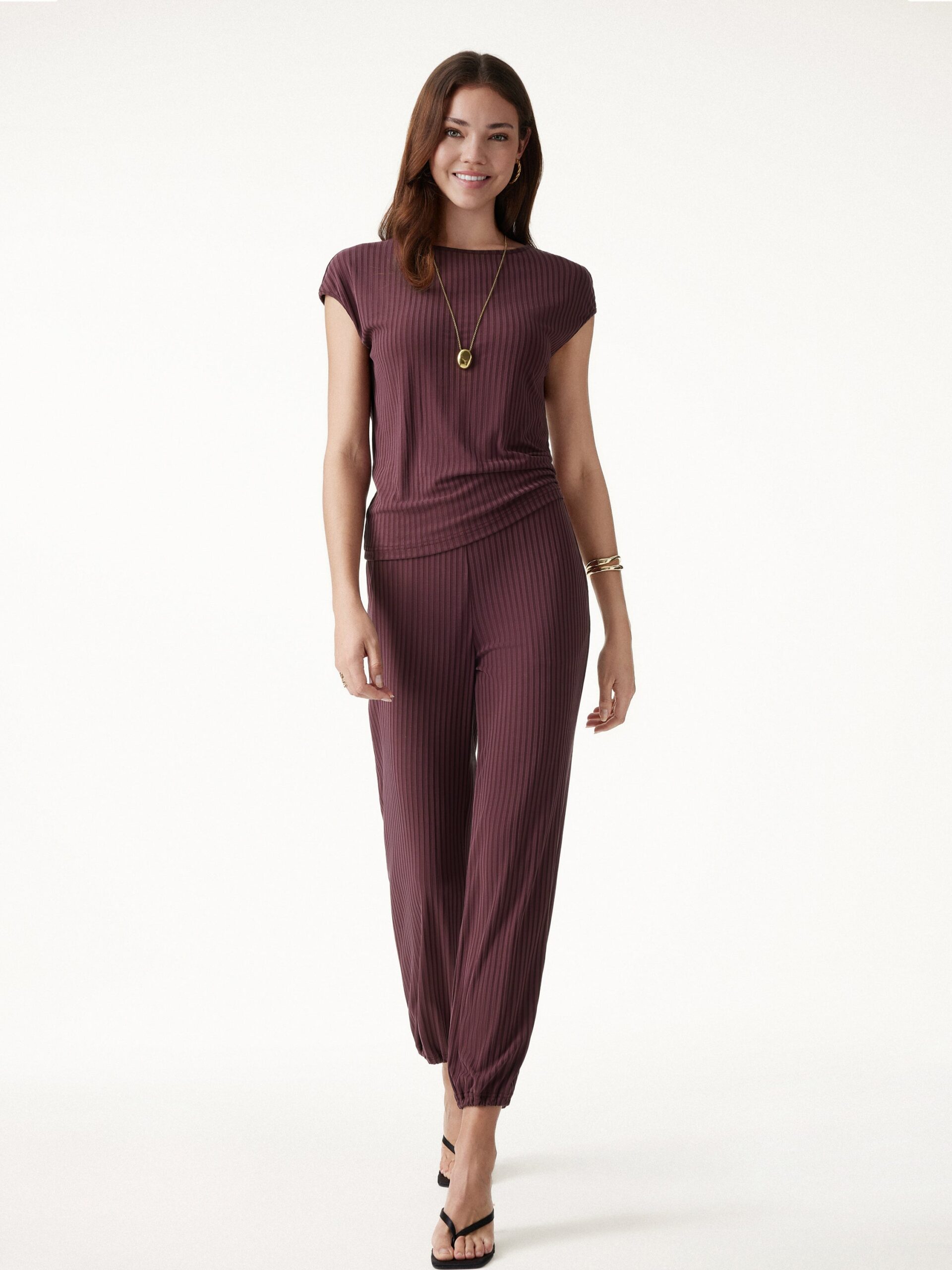
OGLmove wrinkle-free cap sleeve top and cropped pants set official photo

Final Verdict

Oglmove occupies a clear and genuinely useful position in the women’s clothing market: sustainable, versatile everyday wear designed to move with you through real life without compromising on how you look or feel. The range covering tops, pants, skirts, dresses, and matching sets suggests a brand thinking seriously about building a functional wardrobe rather than just filling a trend-driven product calendar.

This is not the right brand for buyers whose sole priority is the lowest possible price, for shoppers who need formal or highly specialized athletic wear, or for anyone who needs the reassurance of a decades-old legacy brand name. For everyone else, particularly the practical, sustainability-conscious buyer who has grown tired of clothing that looks good but fails quickly, it is a brand worth a direct look.

The strongest use case is the woman building a wardrobe with intention: fewer pieces, better quality, consistent aesthetic, and clothes that actually fit how she lives. If that describes you, the next step is straightforward. View the latest options on the official page and start with the pieces or set that fits the gap you are actually trying to fill.

Frequently Asked Questions

Does Oglmove offer matching sets, or do I have to buy separates?
Based on the brand positioning, matching sets appear to be part of the core range alongside individual separates like tops, pants, skirts, and dresses. The current availability is worth checking directly, as collections can update seasonally.

Is Oglmove clothing suitable for both casual and smart-casual occasions?
The brand’s focus on versatility suggests that pieces are designed to work across everyday settings rather than being locked into a single use case. Whether specific pieces meet your definition of smart-casual is best evaluated by looking at the current range and silhouettes available.

How do I choose the right size if I am buying online?
Size guides on the product page are the most reliable reference point. If you are between sizes, checking the specific garment’s fit notes can help. Understanding the exchange or return process before ordering reduces the risk of a poor fit becoming a problem.

What makes Oglmove different from other women’s clothing brands positioning around sustainability?
The combination of sustainability focus with an everyday versatility range that includes matching sets and multiple silhouettes is a specific niche. Many sustainable brands lean heavily toward basics or minimalist aesthetics. Whether Oglmove’s aesthetic and range depth fits your specific wardrobe needs is something the product page will show you clearly.

Is this a good option for travel packing?
Comfortable, versatile pieces and coordinated sets are among the most practical choices for travel packing because they create multiple outfit combinations from fewer items. Based on the brand’s positioning around comfort and versatility, it appears well suited for this use case.

Where can I buy Oglmove clothing?
The most reliable place to check current availability, styles, and purchasing options is through the official store link. You can find current options by visiting the page through this link.

Check the current official offer

Use the official page to confirm the latest bundle, regional availability, shipping details, and any current promotion before you buy.
See the latest Oglmove details

Ready to try it?
See the latest details on the official website.

Visit Official Website

Opens in a new tab.

I Ordered From OGLmove and Here’s What Actually Showed Up

0

I wasn’t expecting much when I first landed on OGLmove. I’d been burned by a few too many Instagram ads that promised soft, flattering basics and delivered something that looked like it had survived three international shipments in a plastic bag. So when I stumbled onto this site one evening while looking for something specific to wear on a work trip, I was skeptical from the start. But the OGLmove review rabbit hole I fell down that night kept me reading for longer than I’d like to admit, and eventually I ended up placing an order. This is just me trying to explain what that whole process looked like, from first click to actually wearing the thing.

What I Was Actually Looking For

I had a work trip coming up — nothing glamorous, just a few days in a warmer city with meetings during the day and casual dinners in the evenings. I didn’t want to pack a bunch of separate outfits. What I wanted was something that could do double duty, look pulled together without requiring ironing, and not make me feel like I was wearing a costume. My budget was loose but not unlimited, somewhere in the $50 to $100 range for a single piece or a set.

I started where everyone starts: Amazon. I found some options but the photos were inconsistent and the sizing charts were a mess of conflicting measurements with reviews saying things like “the medium fits like an extra small.” Local stores near me had already shifted into end-of-season stock, so the selection was thin. I had about fourteen tabs open at one point and none of them were doing it for me. Some boutique-style Instagram shops looked promising but had almost no reviews and vague return policies written in two sentences.

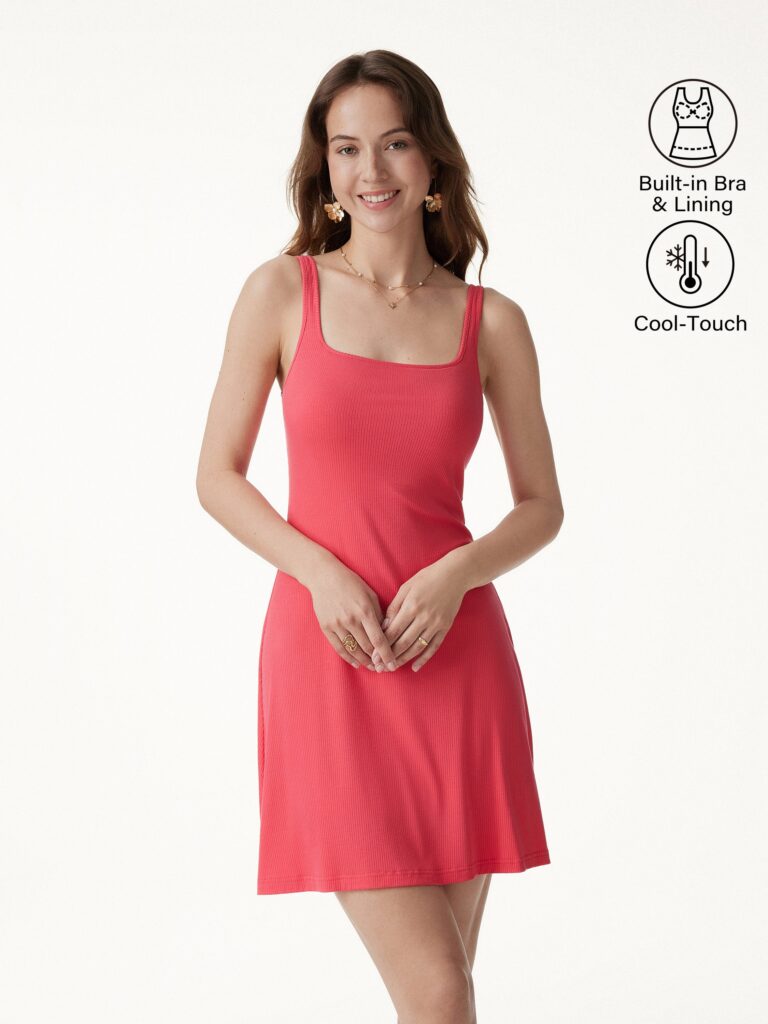
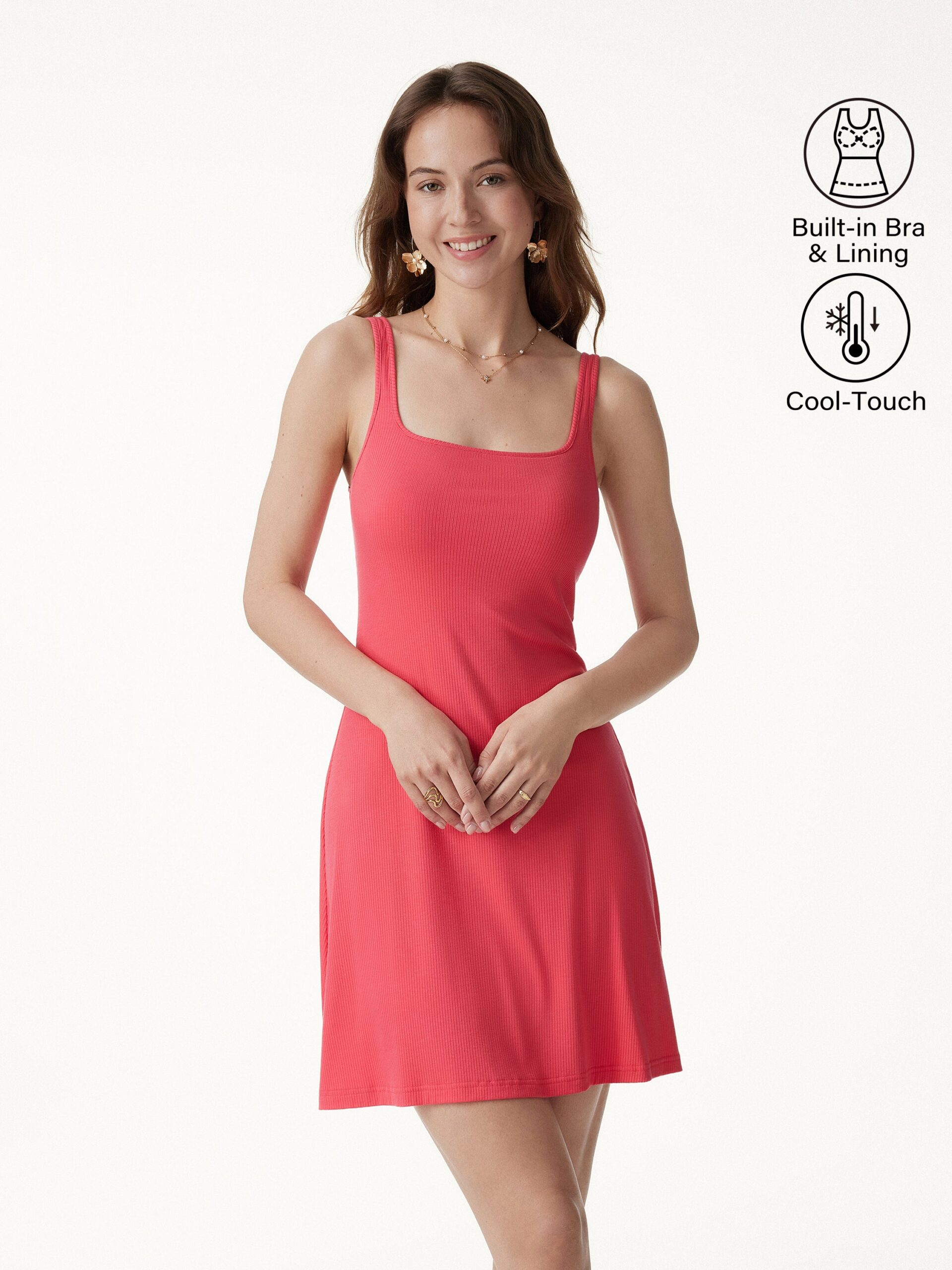
OGLmove CoolTouch Square Neck Sleeveless Bra Dress official product photo

Finding OGLmove

I found OGLmove through a comment thread, of all places. Someone was talking about travel-friendly clothes in a forum and mentioned it almost in passing. I almost scrolled past it. When I typed the name in later that night, I landed on a site that looked more considered than I expected. The layout was clean, categories were easy to navigate — tops, dresses, bottoms, sets — and the product photos were high quality without looking digitally retouched into unreality.

What got me was the fabric descriptions. They had their own fabric naming system, things like CoolTouch and SkinKiss, and while that sounds like marketing speak, they actually explained what each fabric was supposed to feel like and why. There was a section called the Fabric Lab that broke things down by material category. I appreciated that more than I thought I would. The product pages included customer photos, which were honestly the most useful thing on the site. Real people, real lighting, real proportions.

The reviews were aggregated from two sources — Judge.me showing a 4.66 out of 5 based on over 25,000 reviews, and Trustpilot sitting at 4.8 out of 5 from over 4,000 reviews. Those numbers gave me pause in a good way. That’s a lot of people who had opinions about this brand.

Before I Actually Bought Anything

I sat on it for two days. Literally had the item in my cart and forgot about it the first night, then came back to it the following evening because I remembered I’d never checked out. The hesitation was partly about sizing — I’m between sizes in most brands and the photos on these kinds of sites always show the same body type — and partly just the “never heard of this before” feeling. The site mentioned being B-Corp certified since 2024 and a partner of 1% for the Planet, which I looked up and confirmed was a real certification, not a made-up badge. That actually helped. It felt like a brand with some accountability attached to it rather than just a dropshipping operation with a nice homepage.

What actually tipped me toward buying was one specific customer photo on the product page. It showed someone who looked like she had a similar build to mine, wearing the exact color I was considering, and she’d left a detailed note about sizing up. That one review was more useful than the entire size chart.

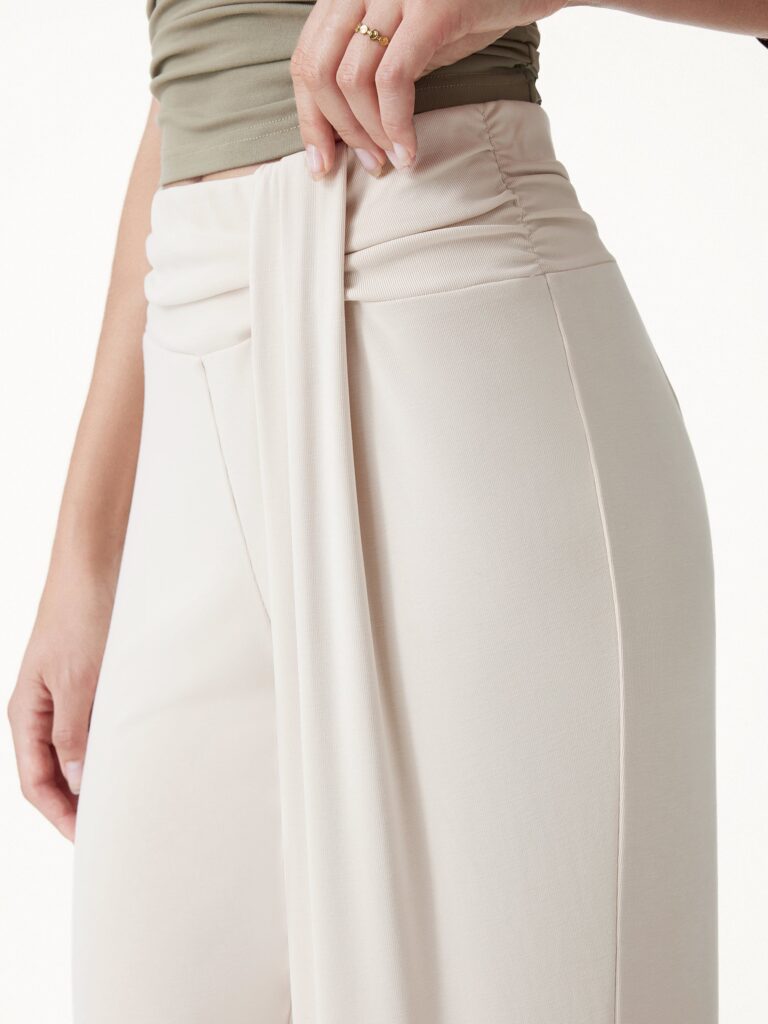
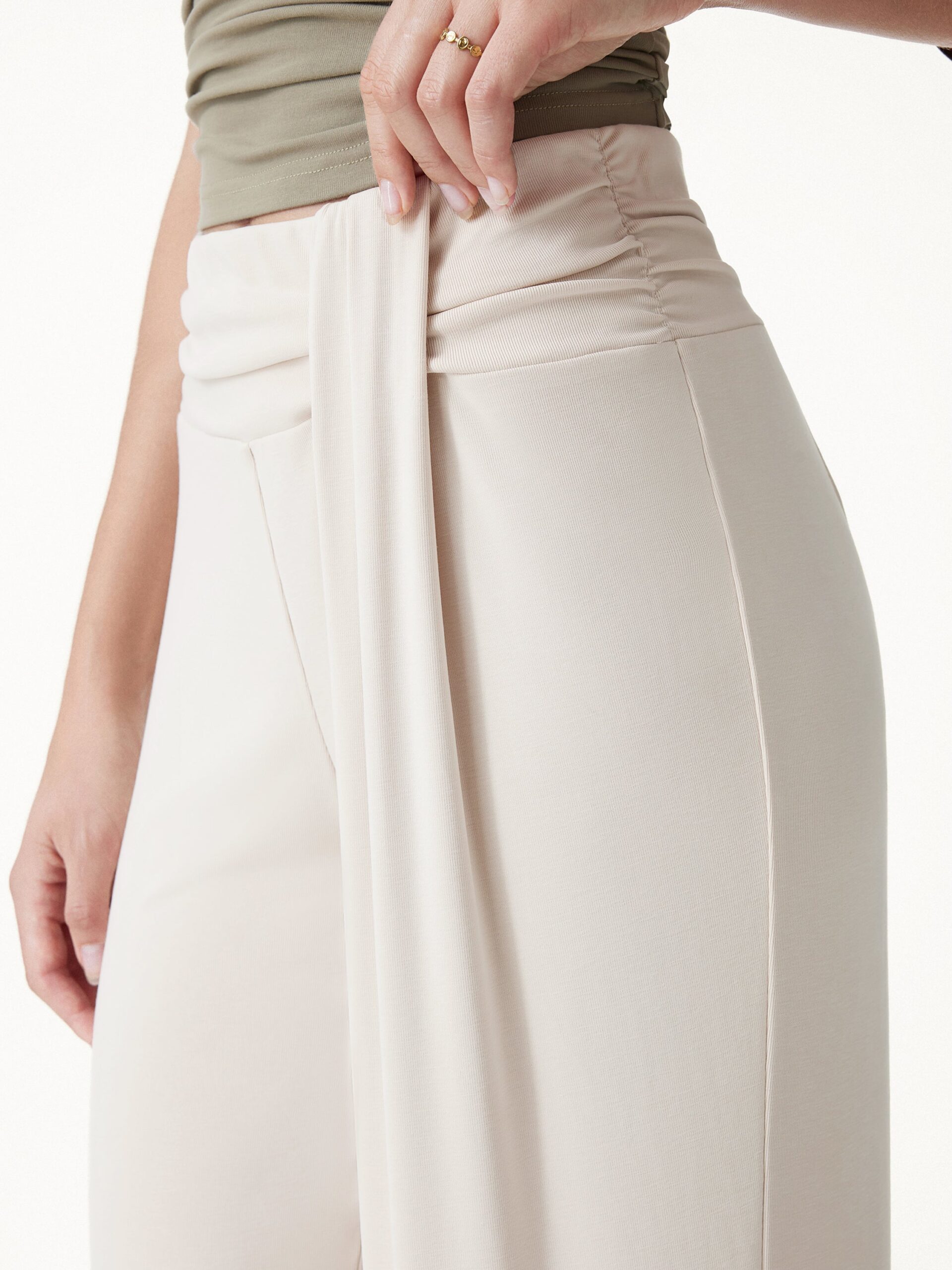
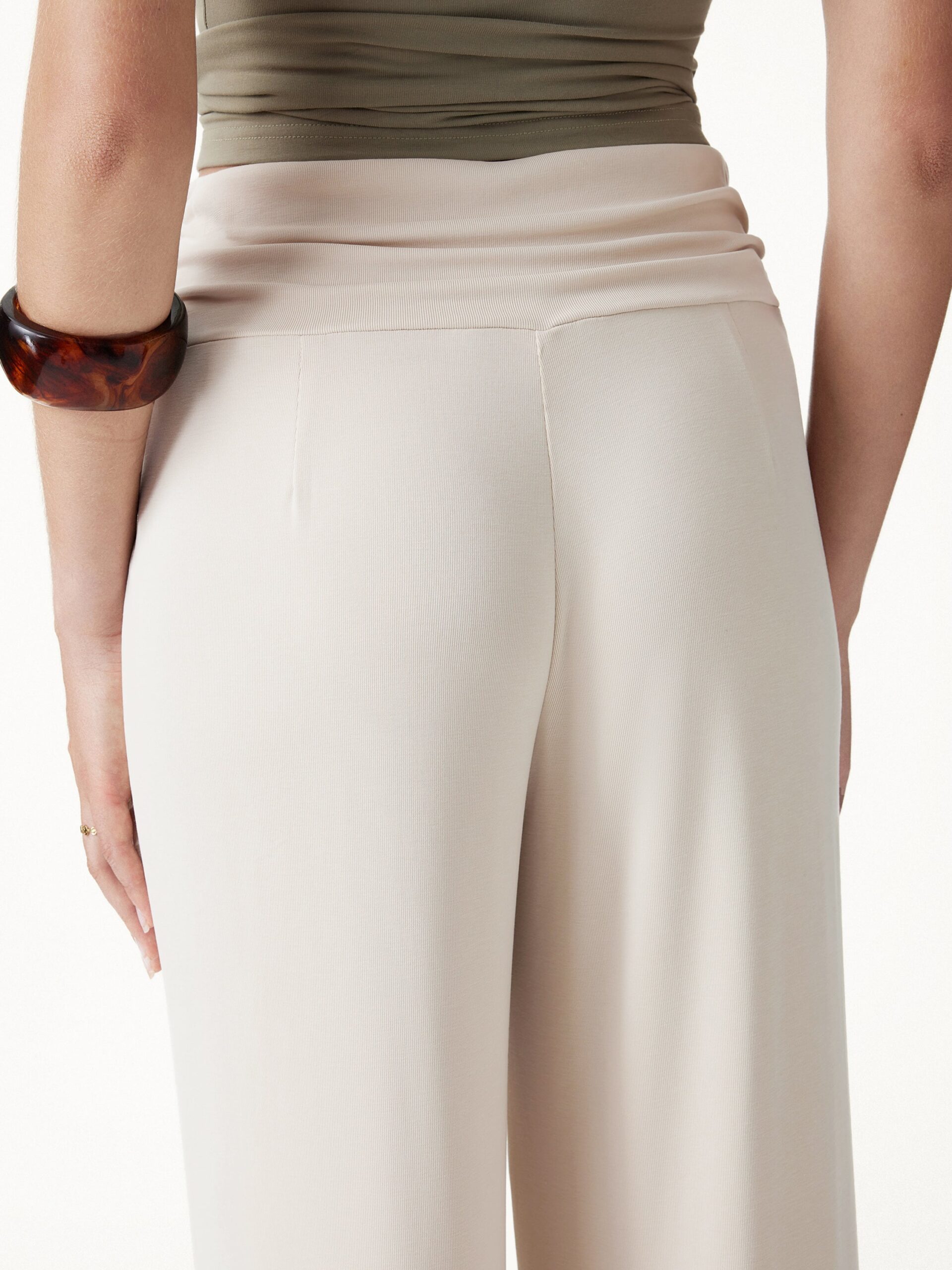
OGLmove Mid-Rise Relaxed Wide-Leg Lounge Pants official product photo

What I Ordered and How It Arrived

I went with the CoolTouch Square Neck Sleeveless Bra Dress in a neutral dusty rose color, size medium, for $79. I also added a pair of the Mid-Rise Relaxed Wide-Leg Lounge Pants on impulse at $89. The checkout was simple, no weird pop-ups pressuring me to buy more, and payment went through without any drama.

The package arrived faster than I expected — about a week after I ordered, which felt reasonable given it was shipping internationally. I’d been obsessively checking the tracking link every morning, which is embarrassing in retrospect. The package itself was compact, wrapped in a thin mailer with the items folded inside tissue paper. Not a lot of extra packaging, which honestly fit with the sustainability angle they talk about on the site.

When I Actually Put It On

The dress was the first thing I tried. The fabric was smooth and cool to the touch — the CoolTouch name isn’t entirely wrong — and it had more weight to it than I expected from a summer dress. Not heavy, but substantial enough that it didn’t cling or bunch weirdly when I moved. The size medium fit well across the shoulders and chest, a little relaxed through the waist, which I actually preferred. The reviewer who said to stick to your usual size was right.

Color accuracy was close but not exact. The dusty rose on my screen leaned slightly more pink than what arrived, which was closer to a muted mauve. Not a complaint exactly, the actual color is nicer in person, but if you’re buying to match something specific you’d want to account for that.

The one thing I noticed immediately was that the dress needed a steam before wearing. It came out of the tissue paper with some fold creases that weren’t going anywhere on their own. I don’t travel with a steamer, so I hung it in the bathroom during a hot shower and most of the creasing relaxed out, but it took a bit of effort.

The lounge pants were the easier win. The fabric on those was softer, more of a knit feel, and the wide-leg cut was exactly what the photos showed. I wore them on the travel day itself and my only note is that the waistband sits slightly higher than I anticipated based on the photos.

I’ve worn the dress three times since the trip. It’s been through one cold wash and came out the same shape, same color. I keep looking at the sets section on the site, trying to figure out if the lounge pants have a matching top they work with.

Ready to try it?
See the latest details on the official website.

Visit Official Website

Opens in a new tab.

I Ordered From OGLmove and Here’s How It Actually Went

0

I’ve been on this whole thing lately where I’m trying to buy less but buy better. Not in a preachy way, just kind of tired of stuff falling apart after three washes or looking nothing like the photos. So I started paying more attention to where things are made and what they’re made from, which sent me down a rabbit hole of sustainable clothing brands that honestly can get exhausting really fast. Most of them are either way too expensive or the aesthetic is very “I live in a yurt,” which isn’t exactly what I’m going for.

I spent a few evenings just bouncing between tabs — some Instagram shops I’d saved months ago, a couple of things on Amazon, and a few brands I recognized from ads. I was specifically looking for wide-leg pants. Comfortable ones. The kind you can wear while running errands but that don’t look like you gave up entirely. I had something in my Amazon cart for a while but kept second-guessing it because the reviews were all over the place and half the photos looked like they were taken in bad lighting by someone who didn’t really want to be there.

That’s around when I came across OGLmove. I don’t even fully remember how — I think someone mentioned it in a comment section somewhere, or maybe it came up when I was searching for “sustainable women’s wide leg pants” at like eleven at night. Doing an OGLmove review search afterward actually pulled up some decent stuff, not the fake-looking listicle reviews but real people talking about sizing and fabric. That made me feel a little better about clicking around.

The website itself was cleaner than I expected. Sometimes sustainable brands have these very cluttered homepages with a lot of mission-statement energy and not a lot of actual product. OGLmove was pretty straightforward — you could browse by tops, dresses, bottoms, sets. They had filters that actually worked. I ended up hovering over the bottoms section for a while and landed on the Mid-Rise Relaxed Wide-Leg Lounge Pants, which were listed at $89. Not cheap, but not outrageous either for something that’s supposed to be made thoughtfully.

OGLmove relaxed wide-leg lounge pants fit detail official photo

The product page had good photos. Multiple angles, different skin tones, a few lifestyle shots. I really hate when brands only show one model from one angle in perfect lighting — you can’t actually tell what you’re getting. These felt more honest. They also had customer reviews embedded, and I noticed the site mentions over 25,000 reviews on Judge.me with a rating of 4.66 out of 5, plus Trustpilot reviews that were similarly positive. I read through a bunch of them and the recurring thing people said was that the fit ran true to size, the fabric didn’t feel cheap, and the colors were accurate in person. That last part mattered to me because I’ve been burned by “dusty pink” that showed up looking more like salmon.

I still hesitated for a bit. Eighty-nine dollars is real money for pants from a brand I’d never tried. I wasn’t totally sure about the sizing — I’m usually between a medium and large depending on the brand and I agonized over that for an embarrassing amount of time. I also just had that general low-level anxiety about trying a new site, wondering if the quality would match the vibe or if it was just really well-photographed. I left the tab open overnight, which is basically my version of sleeping on a decision.

I went back the next morning and just did it. Added the wide-leg pants to the cart, poked around a little more, and almost grabbed one of the bra tanks too but talked myself out of it. Checkout was fine, nothing weird or confusing. They accept normal payment options, nothing sketchy. I got a confirmation email pretty quickly and then, because I’m the kind of person who does this, I checked the tracking link more times than I needed to over the next few days.

OGLmove relaxed wide-leg lounge pants outfit official photo

The package arrived in about a week, maybe slightly longer. Packaging was pretty minimal — not in a bad way, just simple. There wasn’t a lot of extra tissue paper or cards or anything that feels like it’s trying too hard. The pants were folded inside a plain mailer bag. I’d read that OGLmove takes sustainability seriously — they’re B Corp certified and they partner with 1% for the Planet — so I figured the low-waste packaging was probably intentional rather than lazy.

Now, the pants themselves. I put them on immediately and the fit was genuinely good. Wide-leg but not sloppy, and the waistband sat at a comfortable spot. The fabric felt substantial, not the thin stretchy material that pills immediately. One of the customer reviews I’d read mentioned the fabric looks high-quality and doesn’t come off as cheap, and that matched my experience. The color I ordered was a kind of muted olive and it was close to what was shown — not perfectly identical, it read a little more gray-green in real life than in the photos, which honestly I didn’t hate but it was noticeable enough that I registered it.

They needed a quick steam before wearing, which I always forget to account for when I’m excited about something new. Just a little wrinkled from being folded in shipping. Not a big deal but worth knowing.

I’ve worn them a few times since they arrived. They’ve held up fine through washing so far, which was genuinely my biggest concern. I find myself thinking about going back to look at the bra tanks, the one that kept showing up as a bestseller. I didn’t buy it the first time around but I kind of wish I had.

Ready to try it?
See the latest details on the official website.

Visit Official Website

Opens in a new tab.

NewRuleFX Buying Guide for Indie Filmmakers: Stretch a Prop Budget Safely

Small productions do not usually have small imaginations. An indie filmmaker may want a bar fight, a crime scene, a fantasy weapon, a broken window, a practical blood gag, a fake product shelf, a training scene, or a dramatic tabletop insert. The challenge is that every prop dollar has to compete with locations, food, insurance, editing, sound, actors, lighting, transportation, and time. NewRuleFX is useful for this exact problem because it sells many of the specialty items that make a scene feel physical: breakaway bottles, foam rubber tools, training props, labels, artificial ice, movie money, gore pieces, actor cigarette props, and expendables.

This buying guide reviews NewRuleFX from the perspective of a budget-conscious filmmaker, student production, small theater company, or creator studio. The goal is not to buy everything. The goal is to spend where the audience will notice, avoid false economies, and plan enough duplicates so the scene does not collapse after one take. NewRuleFX can be a strong source, but it rewards disciplined shopping. A buyer who arrives with a shot list will get more value than a buyer who simply browses cool props.

Browse NewRuleFX props for production planning

NewRuleFX SMASHProps 12 piece sample pack of breakaway bottle props
Official NewRuleFX product image: SMASHProps 12 piece sample pack of breakaway bottle props.

Start With the Scene, Not the Catalog

The easiest way to overspend is to open a prop catalog before deciding what the scene needs. NewRuleFX has enough interesting categories that a buyer can quickly drift from one idea to another. Instead, write a simple prop brief for each scene. What appears in frame? What does the actor touch? What breaks? What has to be safe near a performer? What needs to pass legal or brand clearance? What will be seen in close-up? What can be suggested with sound, editing, or background dressing rather than purchased as a hero object?

This method turns the catalog into a tool. If a bottle breaks in one shot, search breakaway bottles. If a pipe is swung near an actor, search foam rubber tools. If cash appears on a table, look at movie money. If a crime scene needs pooled blood without messy liquid reset, look at silicone mats or gore dressing. If a fictional store shelf needs safe branding, consider labels. The scene decides the purchase, and that keeps the budget focused.

Spend First on Safety-Critical Props

The first budget priority should be any item that reduces avoidable risk. A real glass bottle, real knife, real hammer, real crowbar, or real pane of glass can seem free because it is already available, but that thinking can be expensive if it slows rehearsal, scares performers, limits blocking, or creates injury risk. NewRuleFX’s breakaway and foam rubber categories exist because productions often need objects that look familiar while behaving more responsibly in staged scenes.

This does not mean every scene needs the most expensive option. It means safety-critical objects deserve proper planning. If an item contacts an actor, passes close to the face, breaks, drops near feet, looks like a weapon, or appears in a public-facing location, do not treat it like ordinary dressing. Budget for the right material, enough duplicates, release paperwork when needed, and professional supervision. A small production that spends wisely on risky objects can often save money elsewhere with creative art direction.

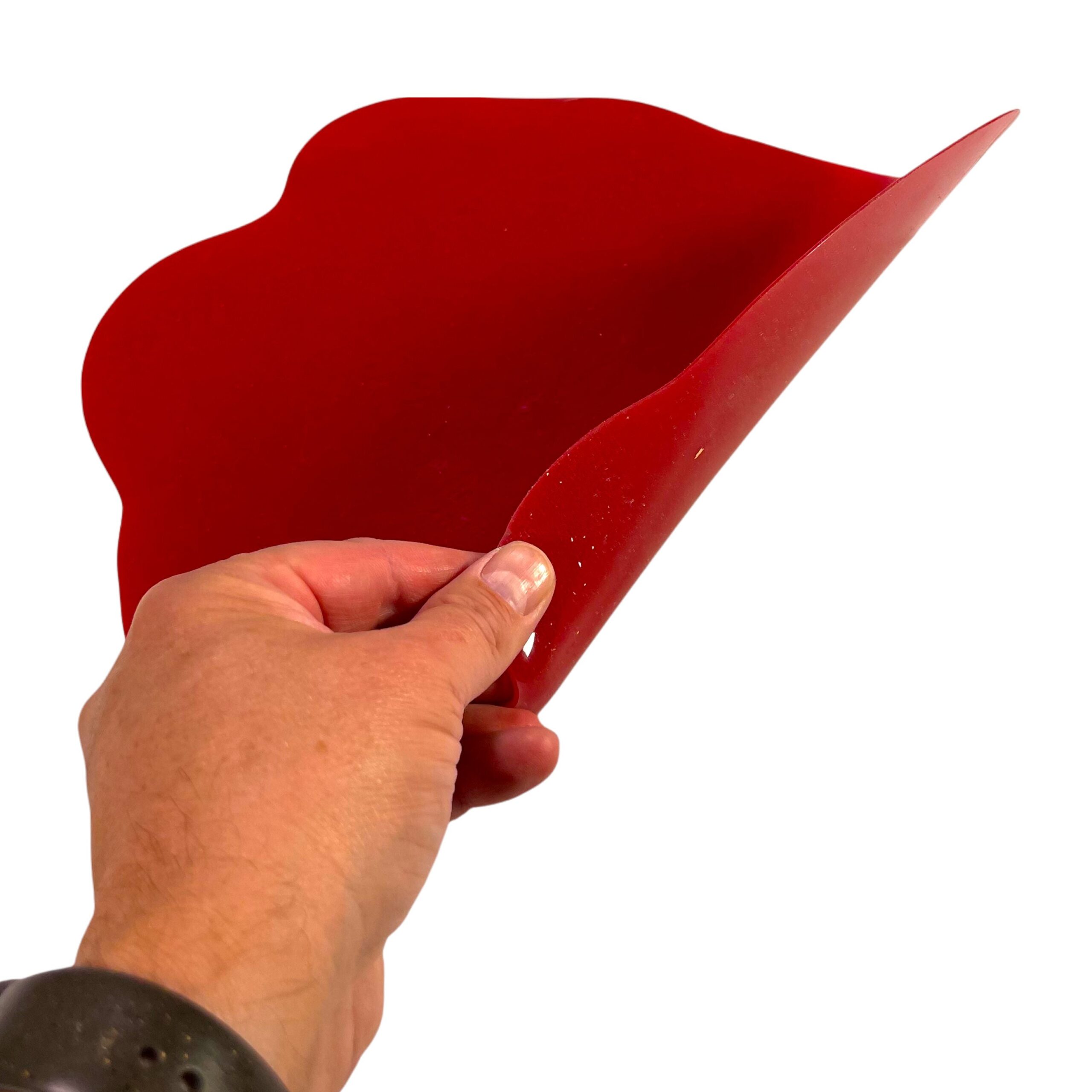
NewRuleFX silicone blood pool puddle mat prop
Official NewRuleFX product image: silicone blood pool puddle mat prop.

Use Multipacks and Samples Strategically

NewRuleFX’s value packs and sample packs can be useful for tight budgets because breakaway props are consumed by use. A single bottle may be enough for a locked-off insert, but it is rarely enough for a scene with rehearsal, multiple angles, and performance uncertainty. A sample pack can help a team test scale, color, break look, and camera realism before committing to a final approach. A value pack can protect the schedule by giving the director more than one attempt.

The trick is to buy multiples where failure would be expensive. If a scene absolutely depends on the bottle smash, order backups. If a break is only a background gag, maybe simplify it. If a theater run needs the same break every night, calculate the full run plus rehearsals, not just opening night. NewRuleFX is attractive because it offers both individual items and multi-piece formats. Budget buyers should use that structure to support the schedule, not to collect extras without a plan.

Prioritize Hero Props Versus Action Props

A hero prop is the object the camera studies. An action prop is the object performers use for movement, contact, destruction, or rehearsal. Sometimes one item can do both jobs, but often it should not. A realistic metal-looking object may be best for a close-up, while a foam rubber NewRuleFX version may be better for the swing or fall. A pristine breakaway item may be saved for the final take while a cheaper stand-in is used for blocking. This split is one of the best ways for indie productions to stretch a budget.

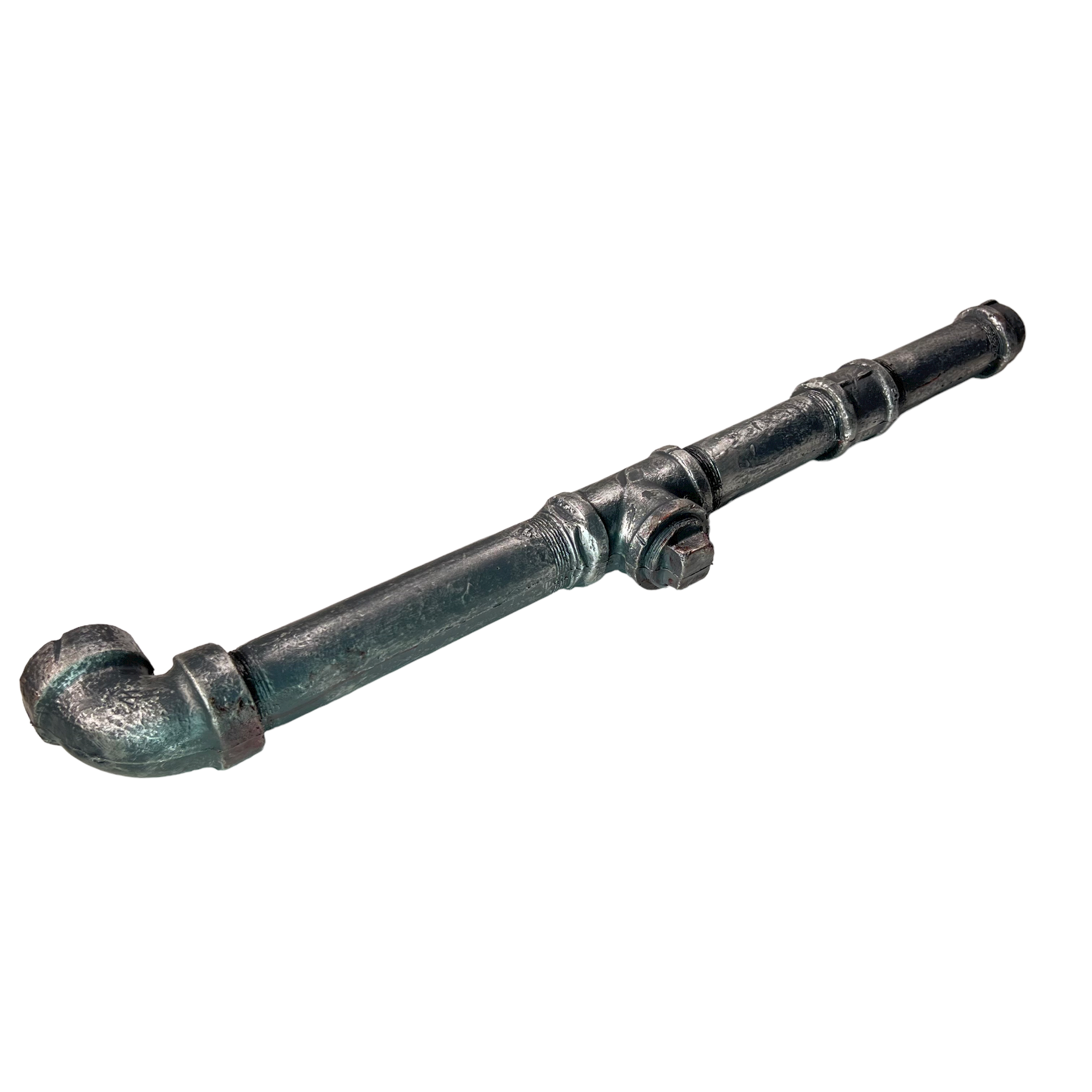
For example, a script may call for a crowbar in a burglary scene. The production can show a detailed close-up of a hard prop lying on a table, then switch to a foam rubber crowbar for movement near an actor. The audience accepts the object because the edit connects the shots. The same logic works for knives, bats, bottles, pipes, and fantasy items. NewRuleFX is most valuable when the buyer thinks about how the prop will be edited, not only how it looks in hand.

Plan for Clearance and Branding

Low-budget productions often forget clearance until the footage is already shot. A recognizable label, logo, package, currency design, or trademarked object can create problems for distribution, advertising, festivals, or client work. NewRuleFX sells labels and movie money categories, and the site also reminds buyers to perform proper clearance for items that may require licensing. That reminder is important. A fake product label or prop money option can be cheaper than fixing a legal problem later.

The practical rule is simple: if the camera can read a brand, ask whether the production has permission or whether a fictional alternative would be better. If cash is important to the scene, use prop money in a way that follows legal and production standards. If a package sits on a shelf, consider a fictional label. Clearance work may feel boring compared with breakaway glass, but it protects the edit. The cheapest prop is the one that does not force a reshoot.

Think About Reset Costs

Every practical effect has a reset cost. A blood puddle may need cleanup. A breakaway bottle may need sweeping and continuity. Artificial ice may need storage and handling. Actor cigarette props may need continuity across takes. A foam tool may need inspection after contact. Indie filmmakers often budget for the item but not for the time around the item. That can be a mistake because time is often the most expensive resource on set.

NewRuleFX items can reduce some reset problems. A silicone blood mat may be cleaner than liquid in certain setups. Artificial ice can avoid melting problems. Labels can help dress multiple products quickly. Foam props can allow repeated rehearsal without destroying an object. But each solution still needs a workflow. Assign who places it, who photographs continuity, who cleans it, who stores it, and who decides when it is no longer camera-ready.

Use the Current Lead-Time Notice Wisely

NewRuleFX’s official site currently says the business is up and running while rebuilding after a fire and that some items may have longer delays. Budget productions should take that seriously. A cheap prop is not cheap if it arrives after the shoot. Before building a scene around a specific item, check availability, especially for specialty props, multiples, fragile breakaways, or anything sensitive. If the schedule is fixed, contact the supplier before ordering or choose a backup scene plan.

Planning early is free. Waiting is expensive. If you are writing a script that depends on a breakaway window, a custom object, or a particular foam weapon, start the sourcing conversation during preproduction. If the project is flexible, build the scene so a similar prop could work. If the prop is non-negotiable, give it the same scheduling respect as a location or actor. That mindset makes NewRuleFX a stronger resource because it lets the supplier answer real timeline questions.

Build a Budget Prop Package

Instead of buying item by item, build a small package around the scene. A bar fight package might include breakaway bottles, backup glassware, floor protection, cleanup supplies, and one foam rubber object for close contact. A crime scene package might include a blood mat, labels, gloves, evidence markers from another supplier, and controlled lighting. A fantasy fight package might include a hero weapon, a foam duplicate, repair materials, and storage labels. NewRuleFX can supply several pieces of these packages, but the buyer should define the package first.

Package thinking also helps the producer approve the spend. It is easier to justify a set of props tied to one finished scene than a random list of cool objects. Each line item should have a job: hero close-up, action take, backup, reset, safety, dressing, or clearance. If an item does not have a job, cut it. If an item protects the scene from failure, keep it. That is how small productions stay creative without becoming careless.

Where to Save Money

Save money on objects the audience will not study. Background dressing can often be borrowed, rented, dressed, or simplified. A table full of clutter does not need every item to be specialty-made. A fake label may solve a brand problem without requiring a custom object. A single well-chosen breakaway can sell a larger fight if the edit is smart. A blood mat or artificial ice piece can be reused across setups if continuity supports it. Budget filmmaking is about directing attention.

Do not save money by using dangerous real objects in contact scenes, ignoring release requirements, or underbuying critical breakaways. That kind of saving can cost the day. NewRuleFX is valuable because it lets a buyer identify the few specialty props that deserve money. Spend there, then be clever around the edges. A production with three properly chosen practical props often looks better than one with twenty cheap objects that no one planned.

Best NewRuleFX Categories for Indie Buyers

  • Breakaway bottles and glass: high-impact visual moments when real glass would be inappropriate.
  • Foam and rubber tools or weapons: rehearsal, close-contact action, horror scenes, and safer movement near performers.
  • Labels and movie money: clearance-aware dressing for commercials, shorts, music videos, and tabletop scenes.
  • Gore and silicone mats: repeatable crime, horror, medical, or aftermath visuals with cleaner reset options.
  • Artificial ice and expendables: continuity helpers that can make small sets feel more controlled and professional.

A Simple Sample Budget Framework

A practical indie budget can be divided into four buckets: safety-critical props, hero camera props, expendables, and dressing. Safety-critical props come first because they affect performers and schedule risk. Hero props come second because the camera will judge them. Expendables come third because the production needs enough breakaways, blood elements, labels, or smoking props to finish the scene. Dressing comes last because background detail can often be simplified, borrowed, or built from cheaper sources.

For a NewRuleFX order, that might mean spending first on the breakaway bottle or soft impact prop, then adding a cleaner background item such as labels, artificial ice, or a silicone blood mat if it helps the scene reset faster. If the budget becomes tight, cut decorative extras before cutting backups for the gag. A scene that completes safely with two good props is better than a scene that owns five interesting objects but cannot reset after the first take.

  • Bucket 1: safety-critical action props and required duplicates.
  • Bucket 2: hero objects that appear in close-up.
  • Bucket 3: expendables, reset aids, and continuity helpers.
  • Bucket 4: background dressing that can be simplified if needed.

Final Verdict

NewRuleFX is a useful supplier for indie filmmakers because it concentrates many hard-to-source production props in one place. The store is not the cheapest way to fill a background, and it should not be used as an impulse-shopping playground. Its value is in targeted purchases: the bottle that needs to break, the rubber tool that needs to pass near an actor, the label that avoids a brand problem, the blood mat that resets quickly, or the prop money that saves the edit from clearance trouble.

The best budget strategy is disciplined: start with the scene, prioritize safety-critical objects, buy duplicates where failure would stop the shoot, test camera realism, and confirm timing before deadlines. Used that way, NewRuleFX can help a small production create moments that feel larger, safer, and more deliberate than the budget suggests. For filmmakers who want practical effects without chaos, it is a smart catalog to know.

Visit NewRuleFX through the official redirect

How DistroKid Finally Fixed My Music Distribution Headache

0

I’ve been managing music releases for independent artists on a freelance basis for about four years now. It started as a side project — a friend needed help getting his EP onto Spotify and Apple Music, and somehow that turned into a small but steady stream of clients who needed the same thing. For the first two years, I was piecing everything together manually. I’d use one platform to distribute to certain stores, another for licensing metadata, and I was constantly logging into separate dashboards to check royalty splits, track plays, and fix ISRC codes that got mangled somewhere between upload and publication. Every release cycle felt like assembling furniture without the instruction sheet. I was spending upwards of six hours per release just on the administrative side of things — not mixing, not mastering, not even talking to the artist about creative direction. Just moving files around and hoping nothing broke.

The clients themselves varied wildly. Some were bedroom producers releasing their first single, some were established independent acts who had been doing this long enough to have opinions about every metadata field. What they had in common was that they wanted their music live quickly, they wanted their royalties paid correctly, and they wanted me to stop emailing them about delays. I tried a few different tools over those early years. One distribution service had a dashboard that looked like it hadn’t been updated since 2011. Another had reasonable features but charged a per-release fee that made the math uncomfortable when a client wanted to push out four singles in two months. I even experimented with having artists handle their own distribution while I focused on the metadata and upload prep, which created a different kind of chaos because suddenly I was troubleshooting someone else’s account at 11pm.

The Breaking Point: Why I Switched

The breaking point came during a particularly stressful month when I was managing three releases simultaneously for two different clients. One artist had a label deal falling through at the last minute and needed everything redistributed under a new name. Another had a dispute with a former collaborator about how royalty splits were set up on a previous release. I was spending more time untangling those issues than actually moving forward, and I kept bumping into the limitations of whatever tools I was using at the time. A colleague mentioned DistroKid in a group chat — not with any particular enthusiasm, just a passing “have you tried this?” — and I looked it up that same evening. After reading a DistroKid review or two and poking around what I could find about its features, I was cautiously interested. The pricing model was different from what I was used to — annual subscription rather than per-release fees — and that alone made me want to understand it better before committing.

First Impressions of DistroKid

My first impression of the platform was that it was more stripped-down than I expected. There wasn’t a lot of marketing fluff on the page, which I actually appreciated. Some of these tools spend so much energy on the landing page that you start to wonder if the product is compensating for something. DistroKid felt like it was built by people who wanted to get music onto streaming platforms without unnecessary friction. I signed up for a paid tier — there’s no free version, which some people find off-putting, but given that the per-release model had been costing me significantly more, the annual fee felt reasonable from a volume standpoint. Onboarding was fast. I had my first test upload — a single I was preparing for a client — going within about twenty minutes of creating the account. That included filling out all the metadata fields, assigning an ISRC, choosing stores, and setting a release date. I’ve done that same process on other platforms in forty-five minutes just because the forms were slow or the UI kept losing my progress.

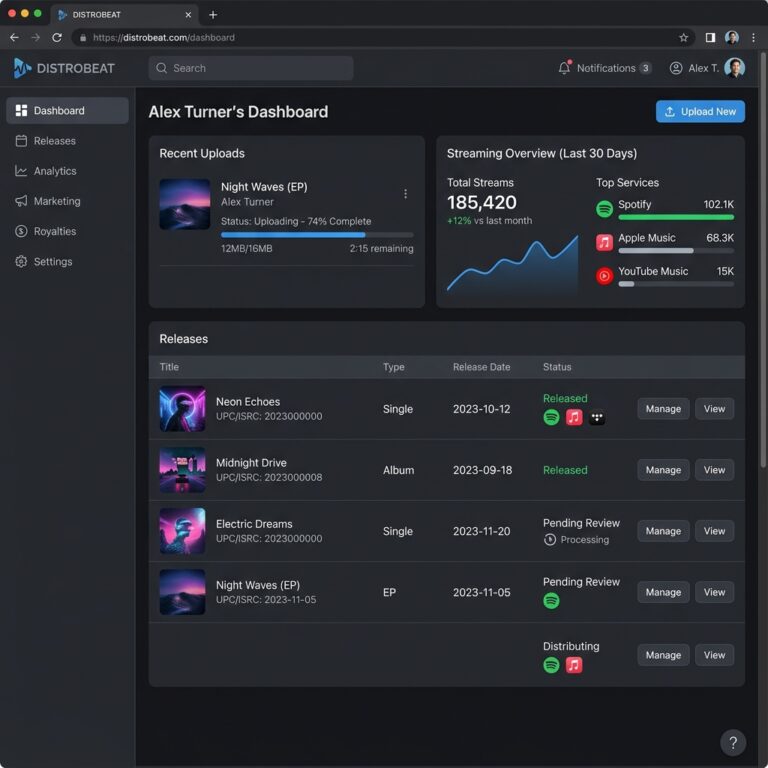
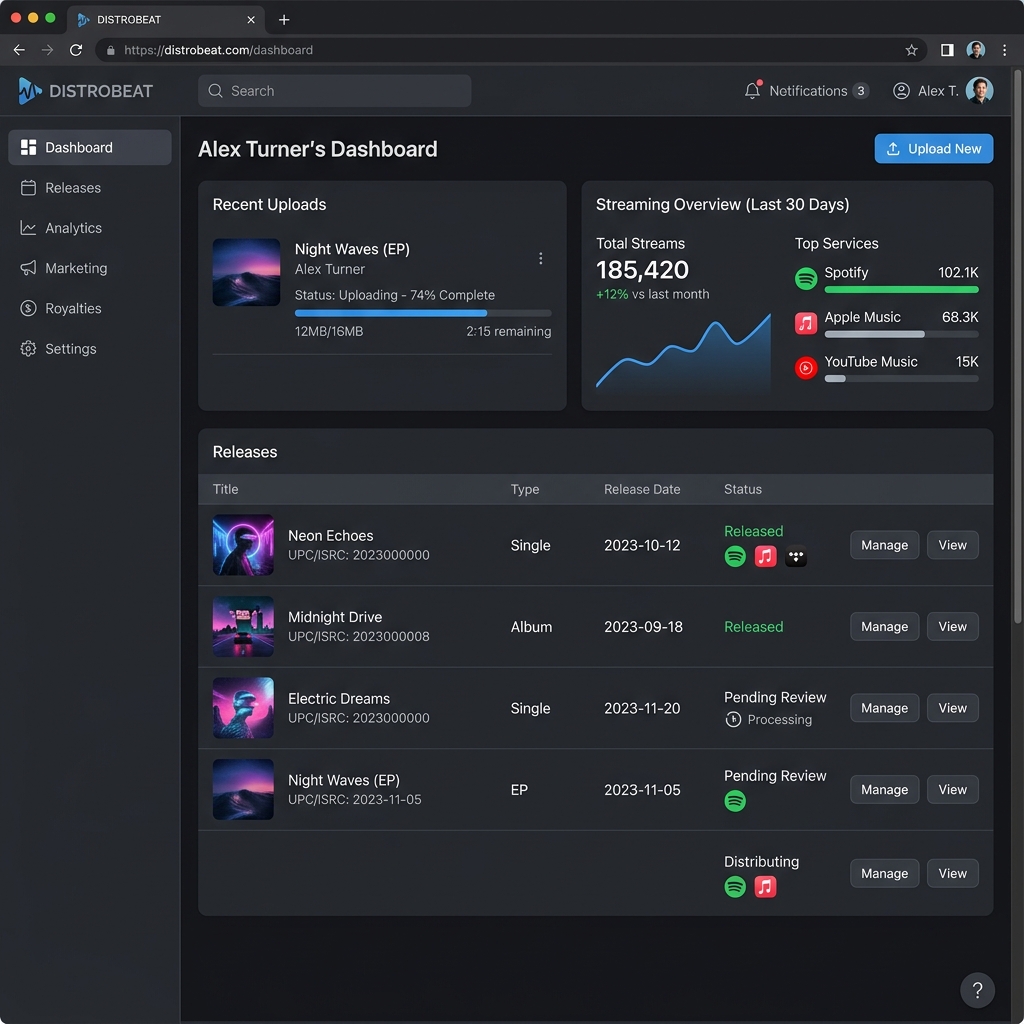
DistroKid music distribution dashboard showing release management

The DistroKid dashboard — clean, minimal, and focused on getting music live fast

Upload Speed: Where DistroKid Stands Out

The thing that stood out immediately was how quickly releases went live. I had been used to waiting four to seven business days in some cases, and on one platform I once waited almost two weeks for a single to appear on a major streaming service. With DistroKid, the first release I submitted went live in about two days. Now, that varies — some stores are faster than others, and I’ve had a couple take a bit longer — but the general pace changed how I schedule client timelines. I used to build in a full two-week buffer before a release date. I’ve since been able to tighten that up considerably, which matters a lot when an artist decides at the last minute that they want to release around a specific date to capitalize on something happening in the news or culture.

Independent music producer workspace with distribution tools

A typical indie producer setup — DistroKid simplifies the distribution workflow

The Honest Downsides

I want to be honest about what doesn’t work as smoothly. The royalty split feature — where you can divide earnings between multiple collaborators automatically — is useful, but it took me a couple of releases to understand exactly how the percentages interact with the platform’s own fee structure. There were a few moments where I thought a split was configured correctly and then had to go back and check because a client got a question from their collaborator about the numbers. It’s not that the feature is broken; it’s that the explanations within the platform assume a baseline understanding that not everyone has, including some of my clients who wanted to manage their own accounts. I ended up writing a short internal guide for clients specifically about how splits work on this platform, which added some time I hadn’t planned for.

There’s also the matter of what happens when something goes wrong with a release — a track gets rejected by a store, or there’s a content ID issue on YouTube. The support process has felt slower than I’d like on a couple of occasions. I understand these companies deal with enormous volume, but when a client is asking every day why their song isn’t appearing somewhere, the turnaround time on a support ticket becomes a real issue. I’ve had to manage client expectations more carefully during those windows, which is its own kind of work. That said, most releases go through without any issues, and the problems I’ve encountered were relatively minor in the larger picture.

The Value Proposition: Unlimited Releases

What I genuinely value, and what I would’ve paid significantly more for back when I was doing things the old way, is the ability to keep as many releases going as I need without doing math on per-release costs. In a busy month I might push out six to eight singles across different clients. Before, that would’ve been a meaningful budget line in my operating costs. Now it’s a fixed annual expense that I’ve already accounted for. The time savings are real too — I’ve cut my average administrative time per release from roughly six hours down to somewhere between two and three, depending on complexity. That might not sound dramatic in isolation, but across twenty or thirty releases a year, it adds up to weeks of recovered time.

Final Thoughts and What I Am Still Learning

One thing I’m still figuring out is how to make better use of the analytics side of things. I’ve been mostly focused on the upload and distribution workflow, but there’s data available about streams and royalties that I haven’t fully explored for my clients. A few of them are starting to ask more questions about performance tracking, and I want to understand whether I can pull useful reporting from DistroKid directly or whether I need a separate tool layered on top. That’s probably the next thing I’ll spend time on — building out a proper reporting process for clients who want that level of visibility.

DistroKid: Pros & Cons

Category Rating Notes
Upload Speed ⭐⭐⭐⭐⭐ Releases go live in 1-2 days, fastest in the industry
Pricing Model ⭐⭐⭐⭐⭐ Unlimited releases for a flat annual fee
Ease of Use ⭐⭐⭐⭐ Clean UI, minimal bloat, gets the job done
Royalty Splits ⭐⭐⭐ Useful but confusing to set up initially
Customer Support ⭐⭐⭐ Slower than ideal for urgent release issues
Analytics ⭐⭐⭐ Data available but could be more actionable
Ready to try it?
See the latest details on the official website.

Visit Official Website

Opens in a new tab.

Whatnot Seller Review 2026: Is It Worth Selling on Whatnot?

Most Whatnot reviews focus on buyers, but the seller side is just as important. Whatnot is not merely a place to list inventory. It is a stage. Sellers need products, pricing discipline, shipping systems, camera presence, category knowledge, and enough consistency to bring people back. A seller who is excellent on eBay may not automatically be excellent on Whatnot, because live shopping changes the job. You are not only describing an item. You are hosting attention.

This seller-focused Whatnot review looks at whether the platform is worth it for resellers, collectors, small shops, and creators in 2026. The answer is: yes, for the right seller. Whatnot can be powerful when you have category-specific inventory, a repeatable show format, and enough personality to keep buyers watching. It is less attractive if you want passive listings only, hate live interaction, cannot ship quickly, or do not know your margins. Selling on Whatnot is ecommerce, but it is also programming. Your show is the storefront.

Ready to try it?

See the latest details on the official website.

Visit Official Website

Opens in a new tab.

Whatnot live shopping marketplace app
Selling on Whatnot is closer to hosting a live show than simply posting static listings.

The Main Seller Advantage

The biggest seller advantage is attention. On a static marketplace, your item competes with every other listing in search results. On Whatnot, buyers enter your stream and spend time with you. If you can hold that attention, you can sell through inventory that might sit elsewhere. You can explain condition live, bundle items, create urgency, tell stories, answer questions, and let buyers feel the pace of a real event. That is especially valuable in categories where enthusiasm drives purchase decisions: cards, comics, sneakers, fashion, vintage goods, toys, coins, jewelry, and collectibles.

The platform also gives sellers multiple selling formats. You can run auctions, offer Buy It Now items, use flash sales, host giveaways, and maintain shop listings outside live shows. That flexibility lets different sellers build different rhythms. A card breaker may rely on spots and live openings. A vintage clothing seller may run rapid auctions. A luxury seller may move slowly and spend more time on condition. A comic seller may mix education with quick lots. Whatnot works best when the format matches the category and the seller’s personality.

The Fee Reality

Whatnot’s official seller fee page says sellers generally pay two types of fees: a commission fee and a payment processing fee. It also says there are no fees to create, store, or manage listings. In the U.S., Canada, and Australia, many categories use an 8 percent commission on the final sale price, while coins and money have a lower commission structure, and payment processing is calculated on the total order value plus a fixed transaction fee. The exact structure can vary by region, category, taxes, and limited-time promotions, so sellers should check current receipts rather than relying on old screenshots.

The practical lesson is that revenue is not profit. A $20 sale is not $20 in your pocket. Commission, payment processing, discounts, coupons, packaging, sourcing cost, time, returns, and shipping choices all matter. Whatnot shows receipts and earnings details, but sellers should still build a margin sheet before going live. This is especially important for low-cost inventory because fixed processing fees and packing time can eat into profit. A seller who runs hundreds of tiny auctions without understanding net margin may feel busy while making less than expected.

Whatnot app live auctions and marketplace
Whatnot sellers need strong category knowledge, live presentation skills, and reliable fulfillment.

Inventory That Works Well

Whatnot tends to reward inventory with story, urgency, or category passion. Collectibles work because buyers care about condition, rarity, nostalgia, and the thrill of discovery. Fashion works when a seller can show fit, fabric, brand, and styling quickly. Sneakers work when buyers trust authenticity and condition. Coins, comics, and cards work when the seller can explain why a piece matters. Mystery boxes, breaks, and bundles can work, but they require careful rules and buyer trust.

The harder inventory is generic commodity product with no story and no reason to watch live. If buyers can get the exact same item cheaper from a normal store, your show has to add value through curation, scarcity, convenience, entertainment, or trust. Whatnot does not magically make every product exciting. It amplifies inventory that benefits from being seen, explained, compared, or competed for in real time.

The Work Behind a Good Show

A good Whatnot show looks spontaneous, but it usually requires preparation. Sellers need lots created, starting prices chosen, items sorted, shipping weights understood, labels or SKU references prepared, camera and lighting tested, and a show flow that prevents dead air. The best sellers know what is coming next. They do not spend half the stream searching through piles while buyers leave. They also know when to slow down for a valuable item and when to move quickly through lower-value lots.

Presentation matters more than some sellers expect. You do not need to be loud or theatrical, but you do need clarity. Hold items still. Show flaws. Repeat the size, condition, and relevant details. Explain rules for breaks, bundles, or giveaways before the auction starts. If chat asks a serious question, answer it. The goal is not to pressure people. The goal is to reduce uncertainty. Buyers bid more confidently when they believe the seller is organized and honest.

Shipping and Fulfillment

Shipping can make or break a Whatnot seller. The platform provides shipping tools, but the seller still has to pack correctly, generate labels, verify weights and dimensions, and get packages moving. Whatnot’s seller shipping guidance emphasizes reviewing shipment details, matching weight and dimensions, and using Seller Hub on the web for adjustments. Those details are not glamorous, but they protect seller reputation. A great live show followed by sloppy packaging is not a great business.

Sellers should build a post-show workflow before scaling. Have sleeves, boxes, bubble mailers, tape, labels, packing slips, storage bins, and a clean area ready. Separate sold items immediately. Use order notes where needed. Do not rely on memory after a long stream. If you sell fragile, high-value, or condition-sensitive items, packaging is part of the product. Buyers remember how the order arrives, not only how exciting the auction felt.

Trust Is the Real Currency

Whatnot sellers can grow quickly when buyers trust them. Trust comes from accurate descriptions, consistent shipping, fair issue resolution, and category competence. It also comes from restraint. Sellers who overhype every item, dodge condition questions, or pressure buyers may get short-term bids but lose long-term customers. In live commerce, repeat buyers are everything. The chat remembers. Category communities talk. A reputation can compound in either direction.

This is especially true in high-risk categories: luxury goods, sneakers, coins, trading cards, sports cards, and anything frequently counterfeited. Sellers should be prepared to prove authenticity, disclose uncertainty, and avoid making claims they cannot support. Whatnot’s counterfeit and buyer protection policies create a platform framework, but sellers create the day-to-day trust. If you sell in a category where fakes exist, your process must be stronger than your personality.

Who Should Sell on Whatnot

  • Resellers with repeatable access to category-specific inventory.
  • Collectors who know their niche deeply and enjoy explaining items live.
  • Small shops that can turn inventory drops into scheduled events.
  • Creators with an audience that already trusts their taste.
  • Sellers who can ship quickly, pack carefully, and handle support professionally.

Who Should Avoid It

  • Sellers who hate being on camera or speaking live.
  • Anyone with poor margins who has not calculated fees, packaging, and time.
  • People who cannot ship reliably after a busy show.
  • Sellers who depend on vague descriptions or hype instead of item knowledge.
  • Businesses that need passive listing income without live hosting.

A Practical First-Show Plan

A new seller should not start with their most expensive inventory. A better first show is a controlled test: one category, a modest number of items, clear starting prices, easy shipping, and enough time to answer questions. Promote the show beforehand. Use good lighting. Keep the desk clean. Run a few lower-stakes auctions to learn the controls. Track sell-through, average price, buyer questions, shipping time, and actual net earnings. After the show, review what dragged, what created bids, and what buyers asked for next.

Do not judge the platform from one chaotic first attempt. Live selling is a skill. The first stream may feel awkward. The first shipping batch may take too long. The first pricing strategy may be wrong. Whatnot becomes more useful when sellers treat it like a repeatable channel rather than a one-night experiment. Schedule consistently, refine categories, build regulars, and improve the workflow before increasing volume.

Final Verdict

Whatnot can be worth it for sellers, but it is not easy money. It rewards preparation, trust, entertainment, and consistency. The platform gives sellers a live audience, flexible selling formats, built-in payment and shipping systems, and a marketplace culture that can turn inventory into events. But fees, packing, show planning, customer service, and category standards all matter. A seller who ignores the operational side will struggle no matter how energetic the show feels.

My seller review is positive for people who understand what they are signing up for. If you have good inventory, know your numbers, enjoy live interaction, and can fulfill orders professionally, Whatnot is one of the most interesting selling platforms available. If you want passive listings with minimal communication, it may be the wrong tool. Whatnot is not just where you sell. It is where you perform the sale.

Ready to try it?

See the latest details on the official website.

Visit Official Website

Opens in a new tab.

A Margin Example Sellers Should Run

Before a seller goes live, they should test margins with conservative numbers. Take a product you expect to sell for $20. Subtract sourcing cost. Subtract Whatnot commission and payment processing. Subtract packaging. Subtract any shipping you choose to subsidize. Then estimate the labor time to photograph, sort, run, pack, and support that item. If the remaining profit is thin, the show may still be worthwhile as a marketing event or inventory-clearing tool, but you should know that before you start the auction at one dollar.

This matters because live selling can make revenue feel like momentum. A stream with constant sales looks successful, but the seller may be discounting too heavily or spending too much time per order. The best sellers know which items are traffic builders, which are margin drivers, and which should be bundled or skipped. Whatnot can move volume, but volume without margin is just a busy evening.

Show Structure Matters

A seller should design the show like a playlist. Start with items that wake up the room but do not risk your best inventory before people arrive. Mix predictable lots with surprise pieces. Repeat key rules without sounding annoyed. Group similar items so buyers know when to stay. Use giveaways strategically, not randomly. Leave space for questions on high-value items. End with a reason for people to follow or bookmark the next show. This is not manipulation; it is basic programming. Viewers stay longer when the show has rhythm.

The seller also needs boundaries. Do not let chat bully you into bad starts on inventory you cannot afford to lose. Do not make authenticity claims casually. Do not promise shipping speed you cannot meet. Do not keep going live if the post-show fulfillment pile is already out of control. A sustainable Whatnot business is built on repeat buyers, and repeat buyers come from clean execution after the stream ends.

Seller Success Signals

  • Buyers ask informed questions because they trust your answers.
  • Repeat names appear in chat without needing constant discounts.
  • Average order value rises as buyers gain confidence.
  • Support messages decrease because descriptions and packaging improve.
  • You can predict net earnings before the show ends, not weeks later.

The Quiet Cost of Customer Service

Seller math should also include support time. A buyer may ask where a package is, whether two orders can be bundled, why an item looks different in person, or how a refund request works. Even when the seller did nothing wrong, those messages take time and emotional bandwidth. The sellers who last on Whatnot build systems for this: clear descriptions, careful packing, fast tracking updates, organized inventory, and polite responses. A messy seller can turn a profitable show into three days of cleanup.

That is why I would not recommend Whatnot to someone who only wants the thrill of going live. The live part is visible, but the business lives in the follow-through. If you enjoy the performance and respect the operations, Whatnot can be a strong channel. If you only enjoy the applause of chat and hate the discipline of fulfillment, the platform will expose that quickly.

  • Budget time for support after every show.
  • Write rules clearly before running breaks, bundles, or giveaways.
  • Track repeat buyer issues so you can fix the workflow instead of answering the same question forever.

Whatnot Buyer Review: Auctions, Shipping, Returns, and Buyer Protection Explained

A good Whatnot buyer review has to start with one warning: this app does not behave like a normal store. You do not open it, add a product to cart, compare three static listings, and leave. You enter live shows. You listen to sellers. You watch the chat. You wait for an auction to start. You might bid, lose, laugh, follow the seller, enter a giveaway, and buy something completely different twenty minutes later. That is the appeal. It is also why buyers need a better system than “I will just see what happens.”

This review focuses on the buyer side of Whatnot: how bidding works, what the buying formats mean, what shipping feels like, how buyer protection works, and where new users make mistakes. Whatnot is not inherently unsafe or inherently amazing. It is a live marketplace, which means the quality of the experience depends on the seller, the category, the buyer’s discipline, the shipping workflow, and the platform policies behind the transaction. If you understand those pieces before you bid, the app becomes much easier to judge.

Ready to try it?

See the latest details on the official website.

Visit Official Website

Opens in a new tab.

Whatnot live shopping marketplace app
Whatnot buyers shop through live shows, seller profiles, auctions, Buy It Now listings, flash sales, and giveaways.

How Buying Works

Whatnot’s official buying guide breaks the experience into live-show buying and buying outside of shows. During live shows, sellers can run auctions, Buy It Now products, flash sales, giveaways, and card breaks. Outside shows, sellers may also list Buy It Now items directly from their shop. That means Whatnot is not only a livestream platform. It is also a marketplace with seller profiles, product listings, offers, pre-bids, and order pages. The live layer is what makes it feel different, but the transaction still happens inside a structured ecommerce system.

Auctions are the main event. In a standard auction, the seller chooses a timer, and late bids can add a few seconds so other buyers can respond. In a sudden-death auction, the timer ends exactly when it ends. Buy It Now items are fixed-price purchases. Flash sales are time-limited discounts. Giveaways are free to enter, although sellers may limit some giveaways to followers or buyers. Card breaks are their own world, where buyers purchase spots tied to packs, boxes, teams, characters, numbers, or draft formats. New users should learn the format before spending money, especially in breaks.

The Good Part: Context and Community

The strongest buyer advantage is context. On a normal marketplace, you often judge a product from photos and a short description. On Whatnot, you can watch the seller show the item, discuss condition, answer questions, compare similar pieces, or explain why something is desirable. That can be valuable in categories where condition and knowledge matter, such as sports cards, Pokémon cards, comics, sneakers, vintage clothing, coins, bags, toys, and other collectibles. A good seller can teach you while selling to you.

The community element is also real. Regular buyers recognize each other. Sellers greet familiar names. Chat jokes develop. People tag friends when a certain item appears. The stream becomes a small room with its own rhythm. That makes shopping feel less lonely and more alive. It can also make you more willing to buy from someone because you feel like you know them. That is not always bad; trust matters in resale. But buyers should remember that friendliness is not a substitute for clear condition, fair pricing, and reliable shipping.

Whatnot app live auctions and marketplace
The live format can make Whatnot feel more personal than static marketplaces, but buyers still need price discipline.

The Risk: Speed Changes Your Brain

Whatnot’s biggest buyer risk is not hidden fees or confusing menus. It is momentum. Live auctions create urgency. A countdown makes an ordinary item feel scarce. Chat activity makes you feel watched. A seller’s energy can make a bid feel like participation rather than spending. You may tell yourself you are only going two dollars higher, then repeat that decision five times. This is how a fun night can become an expensive night.

The fix is simple but not easy: decide limits before the auction starts. If you want a specific card, shoe, bag, comic, or collectible, check comparable prices first. Know your maximum including shipping and tax. Use custom bids when appropriate. Do not bid because someone else outbid you. Do not treat losing as failure. The best Whatnot buyers learn to enjoy watching without needing to win. That one habit makes the app dramatically safer.

Shipping: The Hidden Part of the Price

Whatnot shipping deserves attention because it can change the value of small purchases. For U.S. sellers, Whatnot says orders ship via USPS and the platform automatically chooses an economical service based on product type, category, weight, and shipment size. That is convenient, but buyers still need to read the checkout total. A five-dollar item may not be a five-dollar purchase after shipping and taxes. If you buy multiple items from the same seller, bundling can make the order more efficient, but bundling depends on timing and shipment details.

Seller packing quality also matters. A careful seller can make a modest purchase feel professional. A careless seller can turn a good auction win into a support case. Watch how the seller handles items during the stream. Listen for whether they discuss sleeves, top loaders, boxes, bubble mailers, shoe boxes, dust bags, or fragile packaging when relevant. Check reviews when possible. If a seller is vague about condition and seems rushed with shipping questions, that is a signal to slow down.

Buyer Protection and Refund Timing

Whatnot’s Buyer Protection Policy is one of the reasons I would rather buy inside the platform than through a random off-platform arrangement. The policy covers common serious issues: incorrect or missing items, items that are damaged, defective, expired, fake, counterfeit, not as described, or packages that are lost, delayed, not shipped, misdelivered, or not received after being marked delivered. Whatnot may require a return, and buyers generally need to keep the item in the same condition.

Timing is the part buyers cannot ignore. For most orders, Whatnot requires a request by the earlier of 30 days from purchase or 14 days from delivery. Some categories have tighter delivery windows, including coins and money, sports cards, sneakers and streetwear, trading card games, and luxury goods. Plants and fresh or specialty food are even shorter. This means you should open packages quickly, inspect them, compare them to the listing, and file a request through the app if something is genuinely wrong. Waiting can cost you protection.

What Buyer Protection Does Not Mean

Buyer protection does not mean you can reverse every bad decision. Buyer’s remorse is not the same as receiving the wrong item. A card break that does not hit the card you wanted is not automatically refundable. Tips are not refundable. Refusing delivery or failing to pick up a package is not a shortcut to a refund. Customs and duties are not generally refunded. Off-platform transactions are not covered. Those exclusions are not tiny details; they shape how buyers should behave.

This is especially important in categories with chance, volatility, or fast-moving values. A break spot can be entertaining, but it is not the same as buying a known single. A sneaker price can change. A raw card grade is an opinion until it is professionally graded. A vintage clothing item may have wear that matters more to one buyer than another. Whatnot can protect against real order problems, but it cannot protect you from every risk of collecting, reselling, or bidding emotionally.

Who Will Like Buying on Whatnot

  • Collectors who enjoy live discovery and seller personality.
  • Buyers who already know their category and can spot good prices quickly.
  • People who enjoy auctions but want more social energy than eBay-style bidding.
  • Shoppers who value seeing items handled on camera before purchase.
  • Hobbyists who like following repeat sellers and building trust over time.

Who Should Be Careful

  • Anyone who impulse buys when a timer appears.
  • Buyers who do not check shipping before swiping or bidding.
  • People shopping high-value goods without understanding authentication, condition, or return windows.
  • Anyone tempted by off-platform deals, which remove platform protection.
  • New users entering card breaks or mystery-style formats without reading the rules.

My Buyer Strategy

If I were starting fresh, I would spend the first week watching without buying. I would follow ten sellers, then unfollow half after seeing how they run shows. I would make a note of sellers who show condition slowly, answer questions directly, explain shipping, and do not pressure buyers into spending more than they planned. I would place small orders first, then judge packaging and delivery before making larger purchases. And I would treat the first few orders as a test of the seller, not just a test of the platform.

I would also separate entertainment purchases from serious purchases. If I enter a low-cost break or bid on a fun item, I would treat that as entertainment money. If I buy a high-value card, sneaker, coin, bag, or comic, I would slow down, compare prices, read seller history, and understand the protection window. Whatnot is flexible enough for both casual and serious buying, but the mindset should change with the stakes.

Final Verdict

As a buyer, Whatnot is exciting, useful, and occasionally chaotic. It gives you access to real people, niche inventory, live explanations, and a marketplace rhythm that static platforms cannot match. It also asks more of you. You need budget discipline, seller judgment, shipping awareness, and fast follow-up if something goes wrong. The app rewards buyers who are engaged, informed, and patient enough to walk away.

My buyer review is positive with boundaries. Whatnot is worth using if you enjoy live commerce and know how to set limits. It is not the right place to shop half-awake with no budget and no category knowledge. Watch first, buy slowly, keep transactions on-platform, inspect packages quickly, and use protection responsibly. Done that way, Whatnot can be a genuinely enjoyable way to buy things you care about.

Ready to try it?

See the latest details on the official website.

Visit Official Website

Opens in a new tab.

A Realistic Buyer Checklist

Before bidding, ask four questions. First, do I know what this item normally sells for? Second, did the seller show the condition clearly enough for the price? Third, am I comfortable with the total after shipping and tax? Fourth, would I still want the item tomorrow if there were no countdown timer? If the answer to any of those is no, the best move is to watch. Whatnot rewards patience more than it appears to. There is almost always another show, another seller, another lot, or another chance.

After purchase, inspect quickly. Open the package, compare the item to what was shown, check for missing pieces, confirm condition, and save the packaging until you know everything is fine. If there is a real issue, use the app support flow promptly because the time limits matter. Buyers who wait too long can lose eligibility even when the complaint would otherwise be reasonable. The boring admin habit of checking orders quickly is one of the best protections you have.

How to Think About Card Breaks and Mystery Formats

Card breaks deserve a special mention because they are one of the most misunderstood buying formats on Whatnot. A break can be fun if you understand that you are buying into a format, not buying a guaranteed card. Some breaks assign teams, characters, slots, or packs. Some formats give buyers more control than others. Some are closer to entertainment than investment. Before buying into any break, read the rules, listen to the seller explain distribution, and decide whether the price makes sense if the result is mediocre.

The emotional trap is remembering the biggest hit and forgetting the average outcome. A stream may celebrate the person who lands a huge card, but most buyers will receive ordinary results. That does not make breaks bad. It means they should be budgeted like entertainment unless the format and pricing are clear enough for a serious collector decision. If you cannot explain how the break works to someone else, you probably should not buy a spot yet.

Buyer Red Flags

  • A seller refuses to show condition slowly when asked.
  • Auction rules change midstream or are explained only after bids begin.
  • The seller pushes off-platform payment or private deals.
  • Chat is full of unresolved shipping or condition complaints.
  • You feel like you are bidding to avoid embarrassment rather than because the item is worth the price.

Whatnot Review 2026: Is the Live Shopping Marketplace Actually Worth It?

Whatnot is one of the rare shopping apps that is easier to understand after you watch it than after you read a definition. On paper, it is a live shopping marketplace. In practice, it feels like a mashup of an auction house, a collector convention, a social stream, and a very fast-moving flea market. Sellers go live, show items on camera, run auctions, offer Buy It Now listings, launch flash sales, host giveaways, and build audiences around specific niches. Buyers do not simply search and checkout. They watch, chat, bid, follow sellers, wait for drops, and sometimes buy because the moment feels exciting enough to pull them in.

This Whatnot review is written for people who are curious but cautious. The app is genuinely fun. It can also be expensive if you treat it like entertainment without a budget. The app works best for buyers who enjoy collectibles, fashion, sneakers, sports cards, trading card games, comics, coins, vintage goods, and other category communities where trust and timing matter. It is less ideal for anyone who wants the calmest possible shopping experience. If eBay is a searchable database and Amazon is a delivery machine, Whatnot is a room full of people yelling about the item in front of them. That energy is the product.

Ready to try it?

See the latest details on the official website.

Visit Official Website

Opens in a new tab.

Whatnot live shopping marketplace app
Whatnot is built around live video shopping, auctions, chat, and seller communities.

What Whatnot Does Differently

The most important difference is that The platform makes shopping feel live. A listing on a normal marketplace waits for you. A Whatnot auction moves whether you are ready or not. Sellers can run standard auctions, sudden-death auctions, Buy It Now items, flash sales, giveaways, and card breaks. Whatnot’s own buying guide explains that auctions are the most common live-show format, while Buy It Now products can appear during shows or outside them. In card categories, breaks let buyers purchase spots tied to boxes, cases, packs, teams, characters, or draft positions. That structure makes Whatnot feel less like browsing inventory and more like joining an event.

That event format creates both the magic and the danger. The magic is discovery. You can wander into a comic stream, a sneaker show, a vintage toy seller, a coin auction, a clothing closet, or a trading card break and immediately feel the rhythm of a tiny community. The danger is speed. When a countdown is running and chat is moving, your decision-making changes. A $12 bid can become a $28 bid before you have compared prices elsewhere. A flash sale can feel like a deal because the timer is short. A giveaway can keep you in a stream longer than you planned. Whatnot is not tricking people by being live, but the live format rewards discipline.

The Buyer Experience

As a buyer, the best part of Whatnot is that you get more context than a static product photo can provide. You can ask questions in chat. You can watch the seller handle the item. You can see condition, packaging, scale, and sometimes flaws in real time. For collectibles and vintage goods, that matters. A seller who knows the category can explain why a card corner matters, why a sneaker box affects value, why a comic grade is uncertain, or why one coin is more desirable than another. In a good stream, the host becomes part salesperson, part educator, part entertainer.

The weaker side of the buyer experience is that information can still be incomplete. A live camera is not the same as a professional inspection. Lighting can hide issues. Sellers move fast. Chat can distract everyone. Bids happen under pressure. If you are buying high-value items, you should still verify comps, watch the video receipt when available, read listing details, and avoid assuming that a charismatic seller equals a perfect seller. Whatnot gives buyers more human context than many marketplaces, but the buyer still has to be careful.

Whatnot app live auctions and marketplace
Whatnot combines marketplace tools with live shows, timed auctions, and category communities.

Shipping and Delivery

Shipping is one of the biggest places where Whatnot can feel different from ordinary ecommerce. For U.S.-based sellers, Whatnot says orders ship through USPS and the platform automatically chooses the most cost-effective service based on product type, category, weight, and shipment size. That automation can be convenient, but it also means buyers may not always feel fully in control of shipping cost. If you buy several items from one seller, bundling can help, but shipping charges can still vary depending on weight, distance, taxes, and how the seller prepared the shipment.

In real use, shipping quality depends heavily on sellers. Some sellers pack like professionals. Others pack adequately. A few pack carelessly. Whatnot’s policies can help when something goes wrong, but good buyers still protect themselves by choosing sellers with a track record, reading show notes, watching how items are handled, and keeping expectations realistic. A low-priced single card or tiny collectible may feel less exciting once shipping is added. The app is most economical when you buy intentionally, bundle where appropriate, and avoid chasing every small impulse purchase from separate sellers.

Buyer Protection: Helpful, But Not Unlimited

Whatnot’s buyer protection is a serious part of the platform’s value proposition. The official policy covers issues such as missing or incorrect items, items that are not as described, damaged or defective products, suspected counterfeit items, and packages that are lost, delayed, misdelivered, or not received after being marked delivered. The key detail is timing. Most buyers must submit a request by the earlier of 30 days from purchase or 14 days from delivery. Some categories have shorter windows, including coins and money, sports cards, sneakers and streetwear, trading card games, and luxury goods, where the delivery window is shorter. Plants and specialty food are shorter still.

That protection makes Whatnot feel safer than buying from a random livestreamer off-platform. Still, it is not a blank check. Buyer’s remorse is not the same as an eligible problem. Tips are not refundable. Certain consumable products, including breaks, have narrower refund eligibility. Returning an item in a changed condition can hurt your claim. Off-platform transactions are not covered. In other words, buyer protection is a backstop, not a strategy. The best strategy is still to buy from reputable sellers, inspect the stream carefully, save order details, and report real issues quickly.

Where Whatnot Shines

  • Collectors who enjoy live discovery will probably understand the appeal within minutes.
  • Sellers with personality can make ordinary inventory feel more interesting than it would in a static listing.
  • Niche categories benefit from real-time explanation, especially when condition, rarity, provenance, or community trust matters.
  • The platform is unusually good for browsing when you do not know exactly what you want, because the show format creates discovery.
  • Giveaways, flash sales, and live chat make the marketplace feel alive, which is something most ecommerce sites never achieve.

Where Whatnot Can Frustrate You

The same features that make Whatnot exciting can also make it exhausting. Streams move quickly. Notifications can pull you back in. Auctions can encourage you to bid a little higher because losing feels personal in the moment. Shipping can make small purchases less attractive. Seller quality varies. App glitches, lag, or delayed bids can be especially frustrating in fast auctions. And because categories are community-driven, the best experience often depends on finding trustworthy sellers rather than simply searching for a product.

There is also an emotional spending issue. Live shopping turns buying into entertainment, and entertainment spending needs limits. A buyer who opens Whatnot with a clear budget can have a great time. A buyer who opens it late at night, bored, with saved payment details and no price discipline may wake up to a list of orders they barely remember. This is not unique to Whatnot, but Whatnot’s format makes the risk more visible. The app is fun enough that you should treat fun as part of the cost.

How I Would Use Whatnot Safely

The smartest way to use the app is to start as a viewer. Watch several shows in your category without buying. Learn the language. Notice which sellers answer questions, show condition clearly, and ship consistently. Compare sold prices on other marketplaces before bidding on expensive items. Use custom maximum bids rather than emotional swipes. Keep a monthly budget. Turn off notifications for sellers who tempt you into categories you do not actually collect. For card breaks or mystery-style formats, decide in advance whether you are paying for entertainment or expected value, because those are not the same thing.

I would also be careful with high-value purchases until I had built trust with a seller. Whatnot can be excellent for small collectibles, mid-range fashion, hobby items, and community-driven categories. For expensive luxury goods, rare sneakers, high-value cards, or coins, I would slow down. Read policies, understand return windows, save screenshots or video receipt details, and never move the transaction off Whatnot. The platform’s protection only matters if the purchase remains inside the platform.

Final Verdict

Whatnot is worth trying if you like the social side of shopping and you are disciplined enough to handle live auctions. It is not the calmest marketplace, and it is not always the cheapest. Its value is the experience: real sellers, real-time discovery, category communities, and the thrill of auctions that feel alive. For collectors and hobby shoppers, that can be genuinely addictive in the best and worst senses of the word.

My verdict is positive, but conditional. Whatnot is one of the most interesting shopping platforms online right now, especially for collectibles and niche categories. It is also a platform where smart habits matter. Watch before buying, set limits, choose sellers carefully, understand shipping, and use buyer protection only when something actually goes wrong. If you do that, Whatnot can be more than a marketplace. It can be a surprisingly entertaining way to shop.

Ready to try it?

See the latest details on the official website.

Visit Official Website

Opens in a new tab.

How I Would Score Whatnot

If I were scoring Whatnot as a marketplace, I would not use a single star rating. The experience is too uneven for that. Discovery is excellent because live shows constantly expose you to sellers and categories you would never search for directly. Entertainment value is also high, especially if you enjoy auctions, collectibles, or personalities. The community layer is stronger than most marketplaces because regular buyers and sellers actually recognize each other. Those are the areas where Whatnot feels ahead of traditional resale sites.

The weaker scores would be predictability and restraint. Predictability suffers because sellers vary widely in presentation, packing, shipping speed, condition grading, and category knowledge. Restraint is a buyer problem, not only a platform problem, but the interface definitely makes quick buying feel easy. I would give Whatnot high marks for discovery, community, and energy; medium marks for shipping transparency and seller consistency; and a caution label for impulse spending. That mixed score is exactly why the app is interesting. It is not boring enough to be harmless.

The Best First Week Plan

A new user should spend the first week building a watchlist rather than an order history. Follow sellers in categories you actually care about. Watch how they describe flaws. Notice whether they rush the camera past expensive items. Read chat reactions. Compare auction results with completed sales elsewhere. Enter a giveaway if you want, but do not let the giveaway keep you in a stream that makes you spend. By the end of a week, you should know which categories feel fun, which sellers feel trustworthy, and what a normal price looks like.

After that, place one or two low-stakes orders. Treat them as seller tests. Did the package ship promptly? Was the item packed correctly? Did the condition match what you saw? Did shipping cost make sense? Was the experience good enough that you would buy again? This slow approach may sound less exciting than diving into a live auction, but it protects the part of Whatnot that is actually valuable: long-term access to sellers you trust.

Bottom-Line Buying Rules

  • Never decide your maximum bid after the auction starts.
  • Assume shipping and taxes are part of the item price, not an afterthought.
  • Use Whatnot for discovery, but verify prices elsewhere for expensive items.
  • Keep purchases on-platform so buyer protection still applies.
  • If a stream makes you feel rushed, leave and come back later.

NewRuleFX Custom Props Review: When Off-the-Shelf Effects Props Are Not Enough

A lot of productions begin by searching for an off-the-shelf prop. That makes sense. If a catalog item already matches the scene, buying it saves time, protects the budget, and gives the crew something concrete to approve. But film, theater, advertising, and themed entertainment often need something stranger: a breakaway object in a specific shape, a rubber version of a dangerous tool, a sci-fi weapon with a particular silhouette, a fake product package, a safe stunt duplicate, a hero object that has to match an existing design, or a gag prop that must behave in a very controlled way. This is where NewRuleFX becomes interesting beyond its normal product catalog.

The official NewRuleFX site includes custom work navigation and a custom quote path, and the broader catalog shows why that matters. The store is already built around practical special effects categories: breakaway props, foam and rubber tools, set-safe prop guns, action props, training props, gore, labels, movie money, artificial ice, actor-safe smoking props, and expendables. A supplier that lives in these categories is better positioned to discuss custom needs than a general merchandise store. This review looks at NewRuleFX from a production workflow angle: when custom work is worth considering, what buyers should prepare, and how to avoid wasting time during the quote process.

Contact NewRuleFX or browse current prop options

NewRuleFX foam rubber metal pipe with fittings action stunt prop
Official NewRuleFX product image: foam rubber metal pipe with fittings action stunt prop.

When Custom Work Makes Sense

Custom prop work makes sense when the scene requirement is specific enough that a generic item will either look wrong or create extra risk. A director may need a pipe that appears heavy but can pass close to an actor. A commercial may need a fictional product label because the real brand cannot be shown. A fantasy project may need a weapon silhouette that does not exist in retail. A museum, escape room, or themed installation may need an object that can be handled repeatedly by visitors. A stunt team may need a soft duplicate of an object already chosen by the art department.

The key is to distinguish custom for taste from custom for function. Custom for taste means the buyer simply wants something unique. That can be valid, but it is often expensive. Custom for function means the prop must solve a production problem: safe contact, break behavior, camera realism, clearance, repeatability, weight, scale, installation, or performer handling. NewRuleFX is most compelling when the custom request is tied to function. The more clearly you can explain the job the prop must do, the easier it is for a fabricator to recommend a material, shape, or off-the-shelf alternative.

The Catalog as a Clue to Capabilities

Even before requesting a custom quote, NewRuleFX’s regular catalog gives clues about the kinds of problems the company understands. Foam rubber tools suggest experience with safe-looking metal objects. Breakaway bottles and flat panes suggest knowledge of controlled destruction. Movie money, labels, and artificial ice suggest familiarity with clearance, dressing, and camera illusions. Gore items and blood mats suggest specialty fabrication for horror, medical, and crime scenes. Training props and set-safe categories suggest awareness of sensitive items and release requirements.

That does not mean every custom idea is possible, affordable, or fast. It does mean that a buyer can use the catalog to frame a better conversation. Instead of saying, “Can you make a weird object?” a production can say, “We need something with the visual language of this catalog item, the softness of this foam prop, the approximate scale of this product, and the camera finish of this other piece.” Reference points save time. They also help the buyer decide whether custom work is necessary or whether a standard NewRuleFX item can be modified by the art department.

NewRuleFX large foam sci-fi blaster prop
Official NewRuleFX product image: large foam sci-fi blaster prop.

What to Prepare Before Asking for a Quote

The best custom prop request is specific but not overdesigned. A production should provide the scene context, reference images, approximate size, camera distance, expected handling, number of copies, deadline, budget range, and whether the prop will touch performers. If the item needs to break, bend, bounce, float, glow, spray, hold liquid, survive repeated use, match a hero object, or avoid trademark issues, say so early. These are not small details. They determine material, labor, testing, and whether the supplier can responsibly take the job.

Buyers should also decide who has approval authority. Custom props become slow when the director, producer, art director, stunt coordinator, legal reviewer, and client all comment at different stages. Before contacting NewRuleFX, gather the decision makers or at least agree on the non-negotiables. Is the prop mainly for a close-up? Is performer safety the priority? Is brand clearance the concern? Is the deadline fixed? Is the budget flexible? A clear brief makes the quote more useful and reduces the risk of late changes.

Material Choices and Practical Tradeoffs

Custom prop work is usually a series of tradeoffs. A softer object may be better for contact but less convincing in a macro close-up. A more rigid object may look sharper but require stricter blocking. A breakaway material may create the desired destruction but only once. A painted finish may sell the object on camera but need touch-up after rehearsal. A lightweight object may be easier to swing but must be performed as if it has mass. NewRuleFX’s catalog spans enough material styles that buyers should be prepared to discuss these choices rather than asking for everything at once.

A useful question is: what does the audience actually need to see? If the object flashes through frame during a fight, silhouette and safety may matter more than tiny surface details. If the object sits in a close-up, finish and shape may matter more than contact performance. If it breaks, the failure pattern matters. If it will be reused, durability matters. A custom quote should follow the shot, not the fantasy of a perfect object. The closer the request stays to the actual use case, the more practical the result becomes.

Custom Versus Off-the-Shelf

NewRuleFX’s standard catalog is broad enough that many buyers should start there before requesting custom work. If a foam rubber crowbar, flexible bat, training knife, breakaway bottle, artificial ice piece, label, or blood mat already solves the scene, there may be no need to pay for custom fabrication. Off-the-shelf products also have a clearer buying path and may be easier to reorder. For theater and recurring attractions, reorderability can matter more than uniqueness.

Custom work becomes more attractive when the prop has to match a script detail, a client brand, an existing hero item, a production design language, or a stunt requirement that standard items do not cover. For example, a production might buy a standard NewRuleFX soft pipe for rehearsal but ask about custom dimensions for the final gag. Or a team might use stock breakaway bottles for tests before commissioning a shape that better matches the set. The smartest buyers use the catalog as both a source and a prototype library.

Lead Times and the Current Rebuild Notice

Custom work always needs time, and NewRuleFX’s current site notice makes timing even more important. The company says it is operating while continuing to rebuild after a fire and that some items may have longer delays. For custom buyers, this should trigger early communication. Do not wait until the week before a shoot to ask whether a custom object can be designed, fabricated, approved, shipped, and tested. Even when a supplier is responsive, the physical world has limits.

A responsible schedule includes concept approval, fabrication, finishing, packing, shipping, inspection, camera testing, rehearsal, and possible adjustment. If the item is sensitive, weapon-like, oversized, fragile, or designed to break, add more time. If the prop is for a client campaign, include client review. If it is for theater, include tech rehearsal. Custom props can be extremely valuable, but they reward the production team that plans early and communicates honestly.

Safety, Releases, and Legal Awareness

Custom prop requests can cross into sensitive territory quickly. Anything resembling a firearm, explosive, police baton, tactical item, or weapon may involve release forms, shipping restrictions, local laws, permits, and public-safety concerns. NewRuleFX’s prop release language is a reminder that buyers cannot treat weapon-style props like ordinary decorations. If a custom object will be used in public, transported through public spaces, or filmed where bystanders can see it, the production needs location control and legal awareness.

There is also intellectual property to consider. The official site footer reminds buyers to perform proper clearance for items that may require licensing. That is a smart warning. A custom label, fictional brand, replica object, or inspired design may still create clearance questions for commercial use. Buyers should involve legal or clearance professionals when necessary. A prop supplier can make or sell an object, but the production is responsible for how that object is used in a commercial project.

How NewRuleFX Compares With General Marketplaces

General marketplaces are convenient, but they are often weak for production-specific questions. A seller may not understand why a foam tool needs to match a hero version, why a breakaway item needs backups, why a label must avoid trademark confusion, or why a prop gun cannot simply be shipped like a toy. NewRuleFX’s advantage is category fluency. The site’s structure suggests a business built around prop master problems rather than general consumer browsing.

The tradeoff is that specialty suppliers may have more process. Release forms, lead-time discussions, custom quotes, and safety language can feel slower than one-click buying. For serious productions, that is often a benefit. Process creates clarity. It forces the buyer to explain the scene, check the schedule, and understand the object. In prop work, a little friction can prevent expensive mistakes.

Best Fit for Custom Requests

  • Film and television: stunt duplicates, breakaway variants, specialty dressing, fictional products, and soft versions of hero objects.
  • Theater: repeated-use props, safe action objects, breakaway effects, and designs that must survive rehearsal and performance schedules.
  • Commercials: client-specific product shapes, label-safe alternatives, tabletop effects, and unusual camera-facing objects.
  • Themed entertainment: durable props for attractions, escape rooms, museum-style displays, or controlled visitor interaction.
  • Training environments: scenario props where safety, recognition, durability, and release requirements must be planned carefully.

Budgeting for Custom Prop Work

Custom work should be budgeted as a service, not just as an object. The final price may reflect design interpretation, material research, mold making, sculpting, painting, finishing, testing, packing, and communication. A buyer who only compares the quote to a mass-produced retail prop may misunderstand the value. The question is whether the custom item prevents a bigger production problem: unsafe handling, a failed close-up, an unusable client shot, a clearance issue, or a stunt that cannot be rehearsed properly.

It also helps to ask whether one custom prop is enough. A hero version may need a stunt duplicate. A breakaway version may need multiple copies. A theater version may need replacements across the run. A commercial version may need a pristine backup in case the client requests another take. When evaluating NewRuleFX or any custom supplier, calculate the complete package rather than the first piece alone.

When Custom Work Is Not the Right Answer

Not every production problem deserves a custom build. If the prop appears for half a second in the background, a standard catalog item or art department modification may be wiser. If the script detail can change without hurting the story, changing the scene may save money. If the deadline is unrealistic, forcing a custom job can create more risk than value. Good production judgment includes knowing when to simplify.

  • Use standard catalog items when they already match the camera distance and safety requirement.
  • Reserve custom quotes for props with clear functional, visual, or clearance needs.
  • Do not start custom work until the people with approval authority agree on the brief.

Final Verdict

NewRuleFX is worth considering for custom prop conversations because its standard catalog already demonstrates a strong understanding of practical effects needs. The company is not just selling decorative objects. It works in categories where material, safety, break behavior, camera realism, and professional use all matter. That makes it a logical supplier to approach when an off-the-shelf prop is close but not quite right.

The best custom buyer will come prepared. Bring references, scene context, deadlines, quantities, safety requirements, and a realistic budget. Start with the catalog to see whether a standard item can solve the problem. If not, use those products as reference points for a clear quote request. With early planning and responsible expectations, NewRuleFX can be more than a store. It can be part of the production design and effects workflow.

Start with NewRuleFX catalog and custom options

How I Fell Down the Whatnot Rabbit Hole and Started Buying Pokémon Cards at Midnight

How It All Started

So this whole thing started because of a coworker. We were eating lunch in the break room and he was scrolling through his phone, completely absorbed, occasionally muttering things like “no way” and “come on, come on.” I finally asked what he was watching, expecting it to be some sports highlight or a TikTok feud. Instead he turned the screen toward me and there was a guy in a hoodie ripping open Pokémon card packs on a live stream, with a chat going absolutely feral on the side. My coworker had apparently just won a bid on something called a “personal break” for like fourteen bucks. I had no idea what any of that meant.

That was my introduction to this whole world. He told me it was an app called Whatnot, that he’d been on it for months, and that I should not, under any circumstances, download it if I valued my free time or my checking account balance. Naturally I downloaded it that same night in bed.

First Impressions of the App

My first reaction was honestly confusion. I opened the app expecting something like eBay or Mercari, with neat little product tiles and search filters. Instead I got hit with a wall of live video thumbnails. People in their garages, in basements, in what looked like converted bedrooms, all yelling about cards or shoes or vintage toys at the same time. I tapped on one and got dropped into a stream where a woman was holding up a Funko Pop and counting down from three while numbers flew up the side of the screen. I closed the app. Too much. I came back the next morning thinking I’d give my honest whatnot review a fair shot once I actually understood what I was looking at, because clearly I was missing something that my coworker and apparently hundreds of thousands of other people were not.

Learning the Ropes: A Week of Lurking

I spent probably a week just lurking. That’s the only word for it. I’d open the app at night, find a stream that looked chill, and just watch. No bidding, no chatting, just absorbing. I picked up the lingo slowly. “GA” means giveaway. “BIN” is buy it now. People type “tag” when they want to be added to some kind of multi-person break. Hosts have catchphrases and regulars and inside jokes that took me forever to decode. One sneaker seller I kept landing on had this whole bit where he’d pretend to be offended every time someone lowballed him, and the chat would explode with laughing emojis. It felt less like shopping and more like hanging out in someone’s weird little corner of the internet where commerce happened to be the activity.

Whatnot live shopping review image

The comparison to eBay kept hitting me. eBay is functional, it’s a database with a search bar. This was something completely different. It was QVC for people who grew up online, mixed with Twitch energy, mixed with a flea market. The hosts weren’t polished TV presenters. They were just people, sometimes awkward, sometimes hilarious, occasionally fumbling the camera or yelling at their dog off-screen. That’s what hooked me before I even bought anything. I wasn’t browsing a catalog. I was watching humans.

My First Purchase

My first actual purchase happened on a Tuesday night, I think it was around eleven, and I’d been watching this guy who specialized in vintage trading cards. Not Pokémon, but old baseball stuff from the 80s and 90s, which is what I collected as a kid. He had a lot up for a 1989 Ken Griffey Jr. Upper Deck rookie, raw, not graded, with a starting bid of eight dollars. I had owned this exact card as a ten-year-old and lost it somewhere along the way and seeing it on my screen did something to my brain. I bid. Then someone outbid me. Then I bid again. Final price was nineteen dollars plus shipping. My heart was actually pounding. Over a baseball card. At eleven at night. On a work night.

The card arrived about six days later, which honestly felt longer than I expected because I’d built it up in my head. The packaging was very basic, just a top loader inside a bubble mailer, but the card itself was in solid shape. There was a tiny ding on one corner that I hadn’t been able to see clearly on the stream, which was a little disappointing, but for nineteen bucks I wasn’t going to start drama. I propped it up on my desk and stared at it for an embarrassingly long time.

The Slippery Slope

After that first one, things escalated. I started checking the app during lunch breaks. I followed maybe six or seven sellers and turned on notifications for when they went live. I learned that certain categories have their own rhythm. Sneaker streams move fast and the crowd is intense. Vintage toy streams are slower and friendlier. Coin streams are full of older guys who really know their stuff and will lecture you, kindly, if you bid on something without understanding what it is. I lurked in a plant stream once, just out of curiosity, and watched people pay sixty dollars for a single rooted cutting of something I’d never heard of. The variety on Whatnot is genuinely wild. Two hundred and fifty plus categories according to their own pitch, and I believe it because I keep stumbling into new corners.

There was one night I’ll remember for a while. I was watching a vintage video game stream and a sealed copy of a Game Boy game I had as a kid came up for auction. Not a rare one, not a holy grail, just something nostalgic. The bidding war that broke out was insane. Me and two other people kept pushing it up, ten dollars at a time, then five, then one. I dropped out at seventy-two dollars because my brain finally kicked in and reminded me that I do not actually need a sealed Game Boy game. The winner paid eighty-five. I felt weirdly proud of myself for losing on purpose and also weirdly sad that I lost. Both things at once.

The Honest Downsides

The thing that annoys me, and this is the honest part, is the shipping costs. They feel kind of arbitrary depending on the seller. I paid $4.99 to ship a single card once, which is fine, but then another seller charged me $7 for the same kind of item from a closer state. There’s no real consistency. The app also glitches on me sometimes during high-traffic streams. The audio will desync, or the bid won’t register and I’ll think I’m in the lead and then suddenly the auction’s over and someone else won. That happened to me with a comic book I really wanted and I was salty about it for two days.

Whatnot live shopping review image

My partner has started noticing the packages. Not in a confrontational way, just like, “another one?” when she sees a bubble mailer on the counter. I’ve tried to explain the appeal but it’s hard to convey unless you’ve sat through a stream yourself. It’s the live aspect that does it. Knowing that the person holding the item is right there, that you’re competing with real people in real time, that the auction has a clock and an actual ending. There’s a tension to it that scrolling through static listings on a regular marketplace just doesn’t have. I’ve spent more money in the last two months than I probably should have, but I’ve also genuinely enjoyed almost every transaction, even the ones that didn’t go perfectly.

Building My Strategy

I have a list now. Sellers I trust, sellers I avoid, streams that air at predictable times. There’s a guy who does vintage hot wheels on Sunday nights that I never miss. There’s a card breaker I like even though I almost never buy from him, I just like his commentary. I’ve started chatting in streams more, throwing emojis around, occasionally getting a shoutout from a host who recognizes my username. It feels community-ish in a way I didn’t expect from a shopping app.

Final Thoughts

Looking back at my coworker’s warning in the break room, he was right. I should not have downloaded this. But also I’m glad I did. I’m currently waiting on a package containing a complete set of 1990 Score football cards I bought for twenty-two dollars from a guy in Ohio who streams from what appears to be his finished basement. He threw in two random extras because I’d bought from him before. I just got a notification that one of my followed sellers is going live in twenty minutes with vintage Star Wars figures, which I don’t even collect, but I’m probably going to watch anyway.

Ready to try it?
See the latest details on the official website.

Visit Official Website

Opens in a new tab.