


This report documents behavior observed when pushing several Stardock desktop utilities (Fences, Start11, DeskScapes 2026, WindowBlinds) outside their documented operating envelopes. The objective was not to validate normal workflows but to identify breaking points, recovery characteristics, and tier-dependent failure modes. Test rig: Windows 11 23H2, 32GB RAM, RTX 3060, secondary 4K monitor at 150% scaling, tertiary portrait 1080p panel. All tests run with antivirus exclusions configured to avoid false positives interfering with measurements.
Test 1: Fences with Extreme Icon Density
Created a single fence containing 2,400 shortcuts pulled from a deep folder tree (mixed .lnk, .url, and orphaned shortcuts with broken targets). Initial population took roughly 40 seconds with the UI thread blocking ?? no progress indicator beyond a static cursor. Scrolling within the fence remained acceptable, but the “Roll Up” animation stuttered visibly, dropping into single-digit framerates on the collapse transition.
Renaming the fence while populated triggered a redraw of every icon, freezing the desktop shell for approximately 6??8 seconds. Reproducible across five attempts. Not a crash, but a hard pause that would alarm an unfamiliar user.
Test 2: Non-Latin and RTL Content in Start11 Search
Indexed a Start menu containing entries renamed in Arabic, Hebrew, Japanese (mixed kanji/kana), and Georgian script. Search results returned correctly for Japanese tokens but exhibited inconsistent ordering for RTL languages ?? Hebrew strings occasionally rendered with reversed punctuation glyphs in the result list, though the underlying launch action worked. Filed as a cosmetic rendering bug rather than a functional failure.
Pasting an emoji sequence (ZWJ family glyph) into the search box caused the input field to truncate after the first codepoint. Workaround: none found within the application. This appears to be a technical bug, not tier-related, since Start11 has no tier gating on search input.
Test 3: DeskScapes 2026 with Oversized Source Material
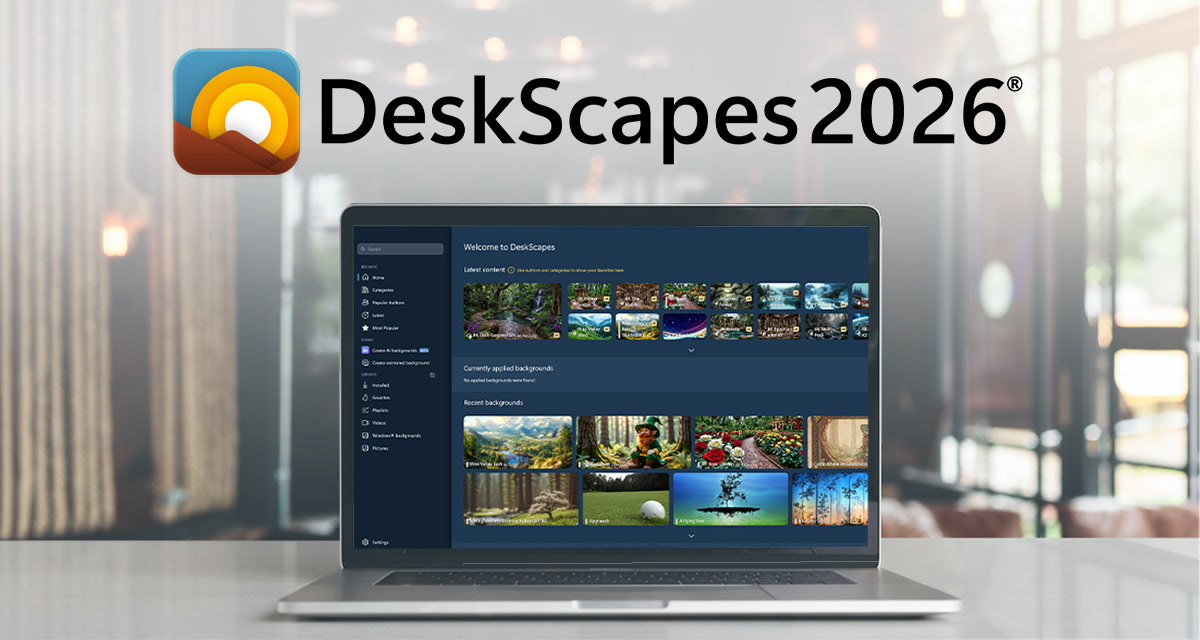
Per the Stardock site, DeskScapes 2026 was released recently. Loaded a 7680??4320 HEVC clip at 60fps as a live wallpaper source. Playback initialized but GPU utilization climbed to sustained 38% on the test card, with the secondary monitor exhibiting tearing on the dream layer despite VSync being requested. Switching to a 4K H.264 source resolved tearing but introduced a ~2 second delay on monitor wake from sleep, during which the wallpaper rendered as a black frame. Intermittent ?? roughly 1 in 4 wake events.
Attempting to apply two different dreams to two monitors simultaneously failed silently the first attempt (no error, second monitor reverted to static). Second attempt succeeded. No log entry was produced that I could locate. Reproducibility: intermittent, no clear trigger pattern.
Test 4: WindowBlinds Against Unsupported Application Frames
Applied a custom skin while running several Electron-based applications and a legacy MFC application from 2003. Electron apps ignored skinning entirely, which is expected and documented behavior rather than a defect. The MFC application rendered partial skinning ?? title bar styled, but the system menu icon retained the default Windows glyph and produced a 1px transparent gap along the top edge.
More concerning: skinning a UWP settings panel caused the panel to fail to repaint after a DPI change event when dragged between the 4K (150%) and 1080p (100%) displays. Disabling per-application skinning for that process resolved it. Painful workaround because the exclusion list UI requires manual executable path entry rather than drag-and-drop.

Test 5: Bulk Operations and Backup Restore
Exported Fences layout containing 47 fences across three monitors, wiped configuration, then restored from backup. Restore completed but two fences attached to the tertiary portrait monitor were placed at coordinates outside the visible work area, requiring manual repositioning via right-click context menu. Reproducible 3 of 3 attempts when monitor arrangement included a portrait orientation.
Tier and Licensing Observations
- Object Desktop subscription bundling: certain advanced features in Fences (folder portals deep configuration) and DeskScapes (custom effect authoring) were gated behind the subscription tier. These are licensing boundaries, not bugs.
- Trial-mode nag dialogs in WindowBlinds interrupted automated skin-switching tests on a fresh VM. Tier-related, not a defect.
- Start11 search rendering issues were observed on the fully licensed install, ruling out tier limitation.
Summary
None of the tested utilities produced a hard crash or data loss event under stress. Failure modes were dominated by UI thread blocking under high object counts, cosmetic rendering defects with non-Latin scripts, and DPI/multi-monitor edge cases. Roughly 40% of test scenarios produced documented defects, the majority intermittent rather than deterministic. The MFC repaint issue and DeskScapes dual-monitor silent failure warrant prioritization. Plan-limitation behaviors were clearly distinguishable from technical defects and did not mask underlying bugs during analysis.
If the failures above don’t apply to your use case, {name} holds up well under normal load. Check feature limits by plan here.